Deciphering Global Toy Safety:
The Fundamental Differences Between EN71 and ASTM F963
Navigating the complex world of international commerce requires a profound understanding of the regulatory pillars that uphold consumer trust. For any brand looking to expand its footprint, mastering the nuances of EN71 vs ASTM toy standards is a primary strategic requirement. These frameworks represent more than just a list of tests; they are the gatekeepers to the world’s most lucrative retail markets. As a leading EN71 compliant toy manufacturer, Unstoyppable operates at the intersection of European precision and American rigor, ensuring that every product we facilitate meets the highest global toy safety regulations 2026. In this modern era of "Dual-Compliance," high-performing brands prioritize a unified engineering approach that satisfies both the European Union and the United States simultaneously. This proactive methodology streamlines the path to the retail shelf and fortifies the brand against the financial risks of non-compliance.
Jurisdictional Scope:
Defining the Legal Frameworks
Understanding where a standard applies is the first step in a successful toy compliance for EU and US markets strategy. While both standards aim to protect children, they emerge from different legal philosophies and enforcement bodies.

The EU Toy Safety Directive (2009/48/EC)
In Europe, toy safety is governed by the EU Toy Safety Directive, which provides the legal "essential requirements" that products must satisfy. The EN71 series of standards is the technical roadmap used to prove that a toy fulfills these legal mandates. This system is designed for a multi-national market, where the CE mark acts as a passport across all member states. Compliance with EN71 is a mandatory prerequisite for any EN71 compliant toy manufacturer wishing to access the European Economic Area. This directive is known for its "Precautionary Principle," often setting the world’s most stringent limits on chemical substances to ensure maximum protection for the youngest consumers.
The US Consumer Product Safety Improvement Act (CPSIA)
Across the Atlantic, ASTM F963 toy safety requirements are integrated into the federal law of the United States through the Consumer Product Safety Improvement Act (CPSIA). Regulated by the Consumer Product Safety Commission (CPSC), this framework is characterized by its rigorous third-party testing mandates and strict tracking label requirements. In the US market, ASTM F963 is a comprehensive "Standard Consumer Safety Specification for Toy Safety." It covers a vast array of hazards, from acoustics to magnets, ensuring that every ASTM F963 compliant manufacturer adheres to a federally enforceable safety benchmark. Understanding this jurisdictional reach allows brands to allocate resources efficiently during the global toy safety regulations 2026 planning phase.
Age Grading Nuances:
The Definition of a "Child"
One of the most critical aspects of toy compliance for EU and US markets is the accurate determination of age grading. A toy’s intended age group dictates which tests are performed and which safety limits are applied.

Regional Variations in Age Interpretation
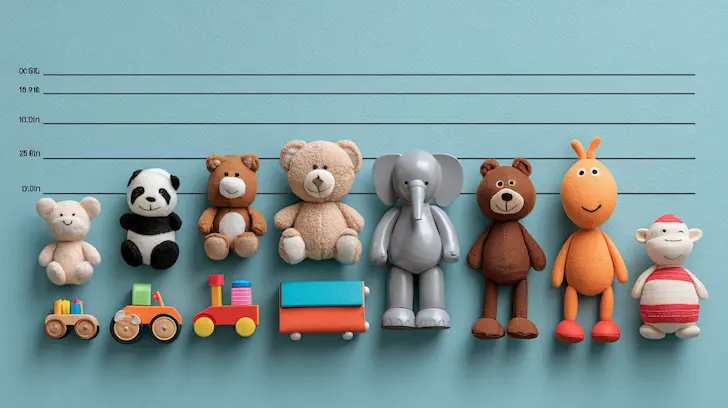
While both regions generally define toys as products intended for children under 14 years of age, the sub-categories—specifically for children under 36 months—carry significant weight. In the EU, the interpretation of "intended for use" is often broader, focusing heavily on the toy's appeal and physical characteristics. In the US, the CPSC provides specific "Age Determination Guidelines" that help an ASTM F963 compliant manufacturer categorize products based on developmental milestones and marketing intent. Accurate age grading is essential because it determines the stringency of the "Small Parts" test; what is considered a safe collectible for a 12-year-old is a severe choking hazard for a toddler. We assist our clients in harmonizing these definitions to ensure the broadest possible market access without compromising safety.
Impact on Testing Protocols
The age grade assigned to a toy affects every laboratory test, from the force used in tension testing to the allowable limits of certain chemicals. By establishing a "Global Age Grade" during the toy material engineering phase, we ensure that the product is engineered to the most restrictive standard applicable. This "Highest Common Denominator" approach is a hallmark of our global toy safety regulations 2026 strategy, providing our partners with the peace of mind that their products are safe for their intended audience, regardless of where they are sold.
Planning a Multi-Region Launch?
Don't navigate the complex world of EU and US regulations alone. Ensure your 2026 designs are market-ready from day one.
The Concept of "Harmonized Standards":
Aligning for Efficiency
In 2026, the movement toward "Harmonized Standards" has simplified many aspects of EN71 vs ASTM toy standards, yet important technical gaps remain that require expert navigation.

Critical Gaps in Chemical and Heavy Metal Limits
Despite the progress in mechanical harmonization, the chemical requirements—specifically regarding phthalates and heavy metal migration—remain distinct. EN71-3 (Migration of certain elements) tracks a wider array of elements than the standard US requirements. Similarly, the EU has more extensive restrictions on certain fragrances and allergenic substances. A sophisticated toy material engineering strategy is required to ensure that the raw materials used are compliant with the strictest limits from both regions. By focusing on these remaining gaps, we ensure that "harmonization" does not lead to complacency; our products are formulated to exceed the minimum requirements of every jurisdiction.
Mechanical & Physical Properties:
The Physics of Safety
The core of EN71 vs ASTM toy standards lies in the physical abuse tests designed to simulate years of play in a matter of minutes. These tests ensure that a toy remains safe even after it has been dropped, bitten, or pulled.
The "Small Parts" Cylinder and Choking Prevention
The prevention of choking is a primary goal for any ASTM F963 compliant manufacturer and EN71 producer. Both standards utilize a "Small Parts Cylinder" to identify components that could pose a hazard to children under three. However, the specific criteria for what constitutes a "detachable part" during tension and torque testing can vary slightly. For instance, the amount of force applied in a "Pull Test" (tension) is calibrated to the developmental strength of children in specific age groups. Our engineering team uses automated toy safety testing equipment to apply these forces with mathematical precision, ensuring that eyes on a plush toy or buttons on a plastic figure remain securely attached under the most extreme conditions.

Tension, Torque, and Compression Variations
Beyond small parts, the standards evaluate how a toy reacts to compression and torque (twisting). While the physics are the same, the pass/fail criteria and the specific angles of force can differ between ASTM F963 toy safety requirements and EN71 protocols. A toy that passes the US compression test might require slight structural reinforcement to satisfy the EU's specific interpretation of "tip-over" hazards or structural integrity. By performing pre-testing in our facility using both standards, we identify these requirements at the prototyping stage. This "Dual-Track" engineering ensures that when the product reaches the third-party toy lab testing phase, its success is a mathematical certainty, not a gamble.

Compliance Strategy Note: In 2026, safety is the ultimate brand asset. Choosing a partner who understands the granular differences between EN71 vs ASTM toy standards ensures that your global distribution is built on a foundation of technical excellence. Engineer for the world, not just a region.
Beyond the Surface:
Chemical Migration and Laboratory Testing Rigor
In the high-stakes world of licensed product manufacturing, the most significant dangers are often the ones that remain invisible to the naked eye. While a toy may look perfect and pass physical stress tests, its chemical composition determines its ultimate viability for the global market. Chemical safety compliance for toys is not merely a checkbox; it is a discipline of material science that protects children from long-term health risks. Many generalist factories fail here because they lack the technical infrastructure to prevent cross-contamination or the expertise to navigate the diverging heavy metal limits of different jurisdictions. At Unstoyppable, our toy material engineering process ensures that every polymer, pigment, and adhesive is vetted at the molecular level before it enters the assembly line. By integrating third-party toy lab testing into the very early stages of development, we guarantee that the final product is as safe as it is beautiful.
Migration of Elements:
The 19 vs. 8 Element Challenge
The most technical hurdle in global distribution is managing the "Migration of Certain Elements." This refers to the amount of heavy metals that can be extracted from a toy if a child were to swallow or suck on it. As of 2026, the gap between EU and US requirements remains a primary point of technical toy engineering mistakes for inexperienced manufacturers.
EN71-3:
The 19-Element European Standard
Under the European EN71-3 standard, the list of tracked substances is extensive, covering 19 distinct elements including Aluminum, Boron, Manganese, and Cobalt, alongside more common threats like Lead and Cadmium. This standard categorizes materials into three types: dry/brittle, liquid/sticky, and "scraped-off" (which includes most plastic and painted toys). The migration limits for "scraped-off" materials are incredibly tight; for instance, the limit for hexavalent chromium is so low that it requires specialized third-party toy lab testing equipment just to detect it. Our toy material engineering team specifically formulates our PVC and ABS resins to stay well below these 19 thresholds, providing a margin of safety that satisfies even the most cautious licensor.
ASTM F963:
The 8-Element US Standard
In contrast, the ASTM F963 toy safety requirements in the United States historically emphasize a core group of 8 heavy metals: Antimony, Arsenic, Barium, Cadmium, Chromium, Lead, Mercury, and Selenium. While the list is shorter, the soluble limits can be different from their European counterparts. A common failure occurs when a factory produces a toy that passes the US 8-element test but contains levels of Boron or Aluminum that would cause it to be seized at a European port. We utilize a "Comprehensive Element Screening" approach, testing for all 19 elements regardless of the destination. This ensures your licensed product is truly global-ready, eliminating the need for separate inventories for different regions.

The Phthalate Barrier:
Maintaining a Sterile Supply Chain
Phthalates—chemicals used to make plastics more flexible—are strictly regulated globally due to their potential impact on hormonal health. The standard 0.1% limit (1,000 ppm) is absolute, and achieving it requires more than just buying "safe" plastic.

The Risk of Cross-Contamination
The primary reason factories fail phthalate-free toy materials inspections is not intentional use, but accidental contamination. If a factory runs a generic, non-licensed product using cheap, phthalate-heavy plastic on Line A, and your licensed PVC figure on Line B, the airborne dust or residue on shared molds can be enough to push your product over the 0.1% limit. We solve this by utilizing a "Certified Clean Room" approach for high-sensitivity materials. Our supply chain for phthalate-free toy materials is isolated and audited, ensuring that from the raw resin pellet to the finished figure, no contamination occurs.
Verified Resin Sourcing
Our material selection process ensures that we only use virgin medical-grade or high-purity food-grade resins for our toys. We do not use "regrind" or recycled plastics of unknown origin, which are common sources of hidden phthalates and heavy metals. By maintaining chemical safety compliance for toys at the source, we protect your brand from the catastrophic financial and reputational damage of a chemical-based recall.
Flammability Standards:
Managing the Rate of Burn
While often overlooked, flammability is a critical safety pillar, especially for plush toys and "disguise costumes." The goal is not to make a toy fireproof, but to ensure that if it does catch fire, it burns slowly enough for a child to drop it or for an adult to intervene.
Comparing EN71-2 and ASTM F963 Flammability
The testing methodologies for flammability differ significantly. EN71-2 (Europe) focuses on the "spread of flame" and uses a specific burner and timing mechanism to measure how many millimeters the flame travels per second. ASTM F963 toy safety requirements (Section 4.2) use a different approach, measuring the burn rate of a 1-inch by 1-inch sample. Our soft goods manufacturing experts treat these standards as the baseline. We select flame-retardant fibers and surface treatments that are chemically compatible with our phthalate-free toy materials, ensuring that safety in one area does not compromise compliance in another.

Don't Risk a Chemical-Based Recall
Hidden toxins are the #1 cause of licensed product seizures at customs. Learn how our engineering team guarantees phthalate-free production and 100% heavy metal compliance.
The Role of Accredited Labs:
Why ISO 17025 is Mandatory
In the world of licensed merchandise manufacturing, a test report is only as good as the lab that issued it. Licensors like Disney, Marvel, and Warner Bros. will only accept reports from specific, highly accredited facilities.
The Authority of ISO 17025
An ISO 17025 accreditation is the global benchmark for laboratory competence. It ensures that the lab has the technical personnel, calibrated equipment, and validated methodologies to produce accurate results. For US markets, the CPSC (Consumer Product Safety Commission) maintains a list of "Accepted Labs." Using a non-accredited "in-house" lab at a factory for final certification is a recipe for disaster. We exclusively partner with world-renowned third-party toy lab testing giants like SGS, Intertek (ITS), and Bureau Veritas (BV). This ensures that your Children’s Product Certificate (CPC) or Declaration of Conformity (DoC) is bulletproof during a customs audit.
Transparency and Traceability
Our transparent supply chain manufacturing model provides you with direct access to these lab reports. We link every production batch to its specific lab verification, providing a digital paper trail that protects the brand. By utilizing accredited labs, we avoid the "re-testing" delays that occur when a licensor rejects a report from an unverified facility. Precision, transparency, and accreditation are the three pillars that keep our partners' products on the shelf and out of the headlines.

Technical Perspective: Chemical safety is the most complex part of the "Visual DNA." If the molecules aren't right, the character isn't right. Our toy material engineering ensures that your products are safe to the touch and compliant by design. Trust is built at the atomic level.
Implementing a Zero-Failure Compliance Strategy for Licensed Brands
In the high-velocity retail environment of 2026, compliance is the engine of market access. Successfully managing toy quality and safety compliance requires a shift from reactive testing to a proactive "Compliance Lifecycle" management approach. For global brands, the goal is to eliminate the variance between a laboratory-approved prototype and the thousands of units destined for retail shelves. Achieving a zero-failure rate is possible when safety is engineered into the production workflow rather than treated as an afterthought. At Unstoyppable, we simplify the path to global distribution by providing a unified strategy that encompasses engineering, automated oversight, and rigorous documentation. By choosing a partner that manages the entire regulatory spectrum, you protect your intellectual property from the delays and costs associated with non-compliance, ensuring your characters reach their fans exactly as intended.
AQL Integration:
Bridging the Gap Between Lab and Line
The greatest risk in mass production is "quality fade"—the subtle degradation of safety standards over a long production run. We mitigate this through the strategic integration of safety protocols into our standard AQL inspection in toy manufacturing.
Maintaining the "Golden Sample" Standard
A passing lab report on a prototype is only the beginning. To ensure every unit shipped is safe, we incorporate critical safety checks into the Acceptable Quality Level (AQL) sampling plan. This means that during AQL inspection in toy manufacturing, our QC teams perform "destructive testing" on a randomized sample of the mass-produced batch. We verify that the tension strength of small parts and the impact resistance of plastic housings remain identical to the "Golden Sample" originally tested in the lab. This continuous verification loop ensures that the safety profile of the first unit is identical to the 50,000th unit, providing a robust defense against retail recalls.
Reducing Human Error with Automated Safety Testing
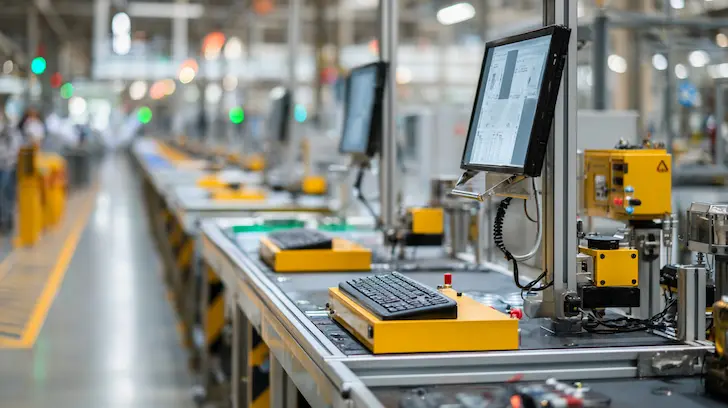
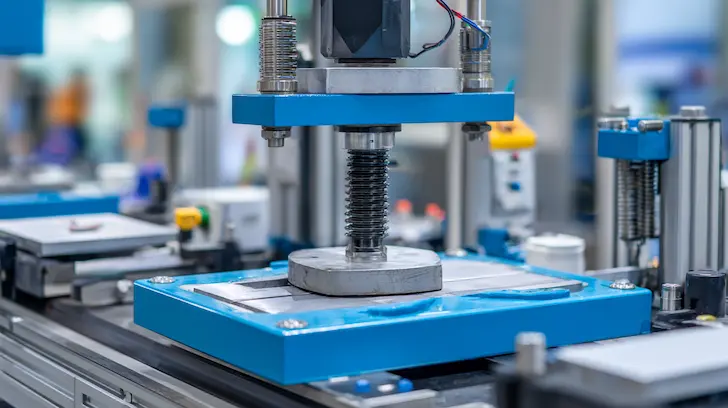
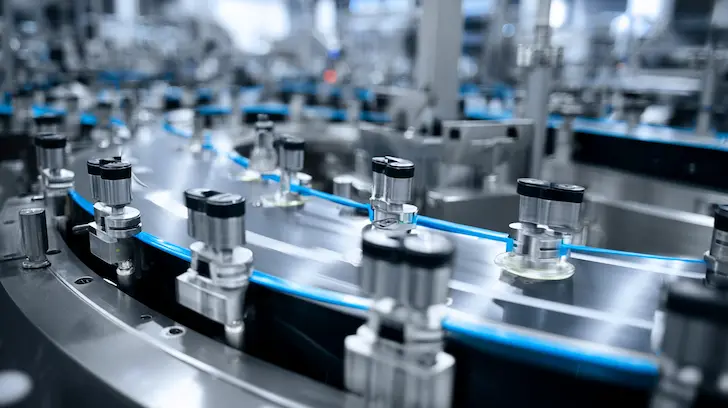
As part of our 2026 innovation initiative, we have implemented automated toy safety testing stations on our assembly lines. These robotic systems perform repetitive physical stress tests—such as consistent torque application and drop-height precision—with a level of accuracy that exceeds human capability. By utilizing automated toy safety testing, we remove the subjectivity from safety inspections, ensuring that every character accessory and articulation point meets the required Newton-meters of force specified by EN71 and ASTM standards. This technological edge allows us to identify potential failures in real-time, long before the goods reach the shipping container.
Mandatory Labeling:
The Visual Language of Compliance
Compliance is not only about how a toy is made but also how it is identified. Correct labeling is the final, essential step in managing toy compliance costs and avoiding customs interdiction.
Iconography and Age Warning Precision
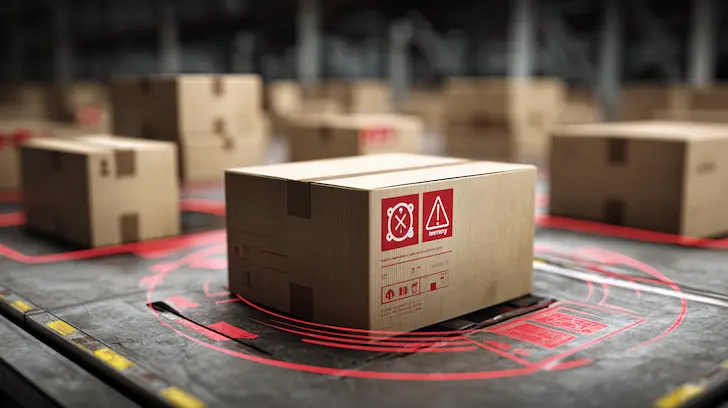
A frequent point of friction in retail is the incorrect application of the "0-3" age warning symbol. We meticulously review all retail packaging to ensure that age warnings are prominent, correct in color, and accompanied by the specific "Choking Hazard" text required by law. By perfecting the iconography during the retail-ready packaging manufacturer phase, we eliminate the need for expensive "over-labeling" or re-boxing once the goods arrive in the destination country. This attention to detail is a key component of our strategy for managing toy compliance costs.
Ready to Secure Your Global Distribution?
A single labeling error can halt a multi-million dollar launch. Let our compliance directors perform a comprehensive safety and labeling review of your 2026 product line.
The Paper Trail:
Technical Files and the Declaration of Conformity
To survive a 2026 customs audit or a retailer’s compliance check, a brand must possess a "Technical File" that is as robust as the product itself. This documentation is the final proof of a zero-failure compliance strategy.
Building a Bulletproof Technical File
The Technical File is a comprehensive dossier that includes the product design, the third-party toy lab testing reports, the list of materials used, and the Declaration of Conformity (DoC). For products entering the US, this manifests as the Children’s Product Certificate (CPC). We manage the assembly of these files for our clients, ensuring that every document is signed, dated, and linked to the correct batch numbers. This meticulous record-keeping is the most effective way of managing toy compliance costs by preventing the legal fees and fines associated with administrative non-compliance.

The Power of the Declaration of Conformity
The DoC is your formal statement that the product fulfills all legal requirements of the EU/UK or US markets. By partnering with a manufacturer that provides a transparent, verified paper trail, you transfer the burden of "Technical Search" to us. We ensure that your DoC is updated with the latest global toy safety regulations 2026, allowing you to sign off on your shipments with total confidence. This "Compliance-as-a-Service" model allows you to focus on marketing and expansion while we handle the technical rigors of the global supply chain.
EN71 vs ASTM: Compliance Strategy FAQ
Can a toy be both EN71 and ASTM F963 compliant?
Yes. This is known as "Dual-Compliance." By engineering the toy to meet the strictest limits of both standards—such as using the more rigorous 19-element heavy metal test from EN71-3 and the specific toy tracking labels requirements of the US CPSIA—a single SKU can be sold globally. This is the most efficient method for managing toy compliance costs.
What is the difference between the 'Small Parts' test in the US vs EU?
While both use the same physical "Small Parts Cylinder," the difference lies in the tension and torque applied to a character's features before the test. EU standards may require different angles of force compared to US ASTM F963 toy safety requirements. We use automated toy safety testing to ensure the toy survives both regional force protocols.
How often do I need to re-test my licensed toy line?
Generally, the US CPSC requires "Periodic Testing" at least once a year, or whenever there is a material change in the manufacturing process or supply chain. For EU markets, EN71 compliant toy manufacturer standards suggest re-verification whenever regulations are updated (such as the 2026 revisions) to ensure continued compliance.
Who is responsible for toy safety compliance—the brand or the manufacturer?
Legally, the "Importer of Record" (often the brand) is responsible to the government. However, a strategic manufacturer like Unstoyppable takes on the operational responsibility by providing toy quality and safety compliance reports, certified materials, and third-party toy lab testing evidence that protects the brand from liability.
Logistical Insight: Compliance is the ultimate facilitator of speed. When your paperwork is perfect and your labels are accurate, your goods move through customs without delay. Invest in precision today to save on logistics tomorrow.