The Engineering Foundation:
Translating Imagination into Industrial Reality
In the competitive landscape of 2026, the transition from a creative spark to a retail-ready masterpiece requires more than just artistic vision; it demands a rigorous engineering foundation. At Unstoyppable, we serve as the technical bridge between your intellectual property and the complex realities of mass production. As a specialized licensed product manufacturer, our engineering team ensures that every curve, joint, and material choice is optimized for structural integrity, safety compliance, and cost-efficient manufacturing. We don't just build toys; we engineer durable brand legacies with full IP protection.
Character Engineering for Toys:
Maintaining Brand DNA
The first step in our OEM manufacturing solution is the faithful translation of your character’s "soul" into a three-dimensional industrial format. This process, known as character engineering, is where the aesthetic requirements of a Disney FAMA style guide meet the mechanical constraints of high-speed injection molding. Our goal is to ensure that the final physical product is a perfect "on-model" representation of your original 2D concept.
From 2D Style Guides to High-Precision 3D CAD
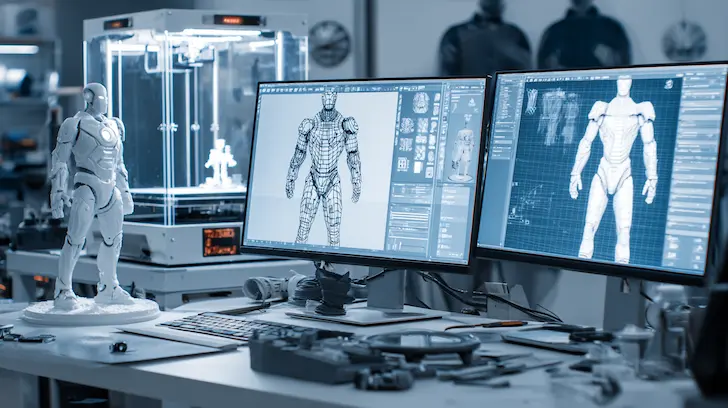
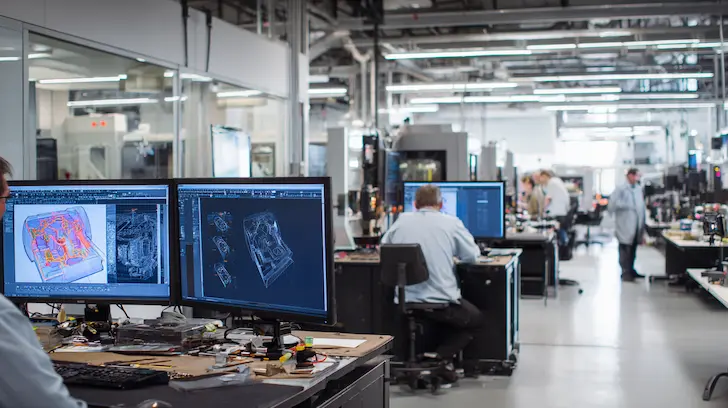
We begin by converting your 2D character sheets and turnarounds into high-precision 3D CAD (Computer-Aided Design) data. Utilizing industry-standard software like SolidWorks, ZBrush, and Rhino, our engineers meticulously build the digital geometry. This is where we interpret perspective and depth that might be "cheated" in 2D drawings. By establishing a robust digital master, we ensure that every subsequent step—from mold development to assembly—is based on identical, flawless data, preventing the "design drift" that often plagues less experienced factories.
The "Anatomy of a Toy":
Balancing Aesthetics with Internal Support
A beautiful exterior is only as good as the structure supporting it. Our engineers design the "internal anatomy" of the toy, incorporating hidden structural supports, screw bosses, and "ribbing" to prevent warping and sink marks during the cooling process. We balance the wall thickness of the plastic to ensure it is lightweight for shipping but rigid enough to survive the rigorous play of a child. This internal engineering is invisible to the consumer but critical for passing ASTM F963 and EN71 safety standards.
Articulation Engineering:
Premium Feel and 2026 Durability
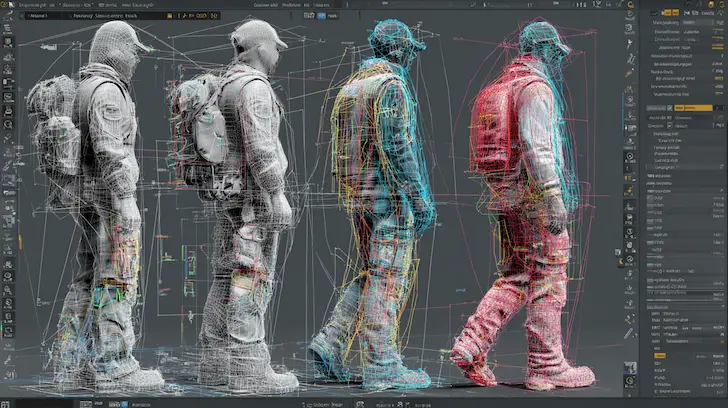
For action figures and collectibles, movement is everything. Our articulation engineering focuses on creating ball joints, swivel hinges, and ratchet joints that provide a "premium click" and maintain tension over thousands of poses. In 2026, we utilize advanced "Insert Molding" techniques to create joints that are nearly impossible to pop off, ensuring they meet the latest anti-choking requirements while offering the range of motion adult collectors demand. We meticulously calibrate the "friction coefficient" of every joint so your character can hold a pose without sagging over time.
Toy Material Engineering:
Science-Backed Selection
Selecting the right material is a specialized science. As a leading licensed toy manufacturer in China, Unstoyppable provides expert toy material engineering to ensure your product feels right, looks right, and stays safe throughout its lifecycle. We match specific polymers to the functional requirements of each part of the toy, ensuring a harmonious assembly.
Substrate Selection:
ABS, PVC, and Beyond
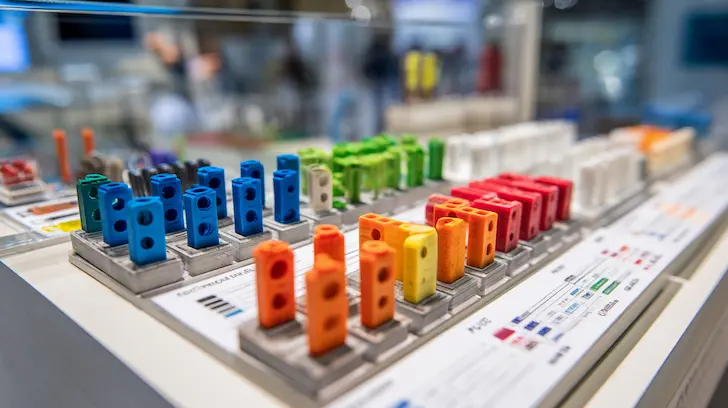
We select substrate materials based on the target age-grade and functional needs of the part. For example, we typically utilize ABS (Acrylonitrile Butadiene Styrene) for rigid internal skeletons or building blocks due to its high impact resistance and dimensional stability. For the softer, more tactile outer "skin" of a figure, we use high-grade PVC or TPE (Thermoplastic Elastomer). By engineering the interaction between these different materials, we create products that are both indestructible and comfortable to handle.
The Chemistry of Safety:
Phthalate-Free and BPA-Free Polymers
Safety is the non-negotiable cornerstone of our manufacturing technology. Our materials are engineered to be 100% phthalate-free, BPA-free, and lead-safe. In 2026, we have moved toward "Bio-Balanced" polymers that replace traditional fossil-fuel-based plasticizers with vegetable-oil-derived alternatives. These advanced materials provide the same flexibility and vibrant color-retention as traditional plastics but with a significantly lower toxicity profile, ensuring your brand is always protected from shifting global chemical regulations.
The Engineering Specification:
Your Production Blueprint
Every engineering decision we make is documented in a comprehensive Engineering Specification (Eng Spec). This document acts as the definitive blueprint for all future production stages, including mold development and injection tooling. It details the exact resin grades, color masterbatches, painting techniques, and assembly sequences required. This level of detail is how we maintain 100% consistency across multiple BSCI audited toy factories, ensuring that the first unit off the line is identical to the millionth.
A great toy begins with flawless data.
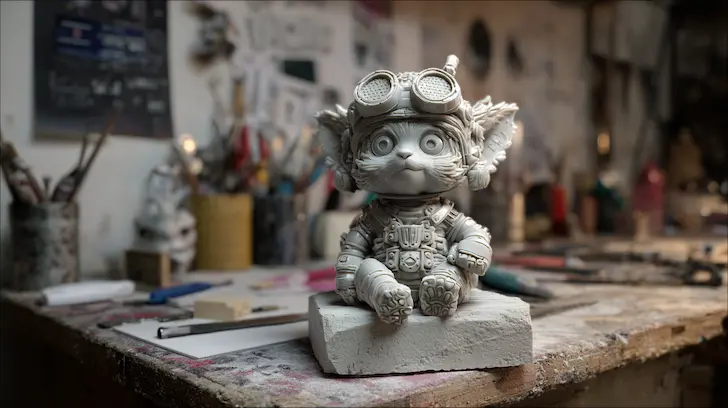
Our Character Engineering for Toys team ensures your IP is structurally sound and ready for the world.
Request a Technical Design Review or explore our Toy Material Engineering standards.
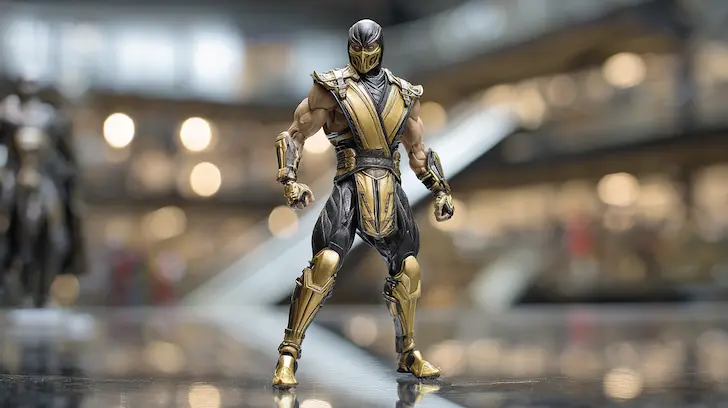
Our FEA simulations include drop test simulations onto hard concrete, tension tests for small parts (to prevent choking hazards), and compression tests for heavy playsets. By simulating these real-world play scenarios in a digital environment, we ensure that your product is "Born Tough." This proactive engineering approach is why Unstoyppable is the preferred partner for high-stakes entertainment merchandise manufacturing, where failure is not an option.
The result of this rigorous foundation is a "production-ready" design that is optimized for our Prototyping Stage. From here, we move into physical validation, ensuring that the digital brilliance we've engineered translates perfectly into a tangible Golden Sample. Our product manufacturing capabilities are designed to take this flawless engineering and scale it to global retail volumes without a single compromise in quality.
Rapid Prototyping:
De-risking Development with 2026 Technology
In the fast-paced world of licensed product manufacturing, the bridge between a digital 3D model and a mass-produced retail unit is built through physical validation. Rapid prototyping is the essential phase where we identify potential challenges, refine aesthetics, and ensure mechanical functionality before investing in expensive steel tooling. At Unstoyppable, we leverage 2026’s most advanced additive manufacturing and subtractive machining technologies to provide our clients with a clear, tangible roadmap to success. By utilizing a multi-stage iterative process, we effectively de-risk your investment, ensuring that the final product is a perfect realization of your brand’s vision.
Prototyping is a strategic safeguard. It is a collaborative journey that allows brand owners, engineers, and stakeholders to hold the product in their hands, evaluate its "shelf presence," and test its play features. Our toy prototyping manufacturer services are designed to be agile, allowing for rapid adjustments that save months of time during the licensed toy manufacturing cycle. We provide the physical proof that your concept is not only beautiful but also ready for the rigors of the global market.
Toy Prototyping Manufacturer:
The Multi-Stage Iteration Process
A high-quality toy evolves through several distinct physical forms. Each stage of the toy prototyping manufacturer process serves a specific purpose, from basic aesthetic checks to complex mechanical endurance testing. By following this structured path, we guarantee that every detail is polished to perfection.
Visual Prototype (Looks-Like):
Aesthetic Approval and Form Study
The Visual Prototype, often called the "Looks-Like" sample, focuses entirely on the product’s exterior. We utilize high-resolution SLA (Stereolithography) resin printing to capture every microscopic detail of your character’s sculpt. These models are typically monochromatic or basic-colored and are used to evaluate proportions, silhouette, and character likeness. It is the first time a 2D design becomes a 3D reality, providing the perfect opportunity for brand owners to provide "on-model" creative feedback before any mechanical complexity is added.
Functional Prototype (Works-Like):
Testing Mechanical Action
Once the form is locked, we move to the Functional Prototype, or the "Works-Like" sample. This stage is critical for electronic toy manufacturing or toys with complex mechanical features. We often use CNC machining or FDM (Fused Deposition Modeling) with engineering-grade plastics to create parts that mimic the strength of final production materials. Here, we test gear ratios, spring tensions, battery compartments, and articulation ranges. By validating these functions now, we ensure that the "play pattern" is intuitive and durable, preventing costly mechanical failures later in the toy manufacturing process.
Engineering Prototype (EP1 & EP2):
The Pre-Production Milestone
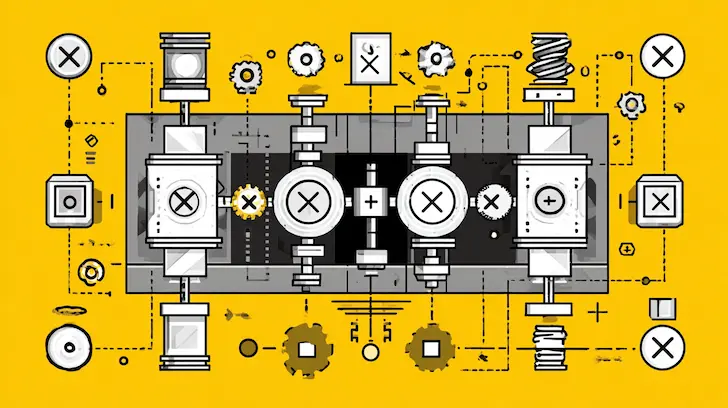
The Engineering Prototype (EP) is a sophisticated, hand-assembled sample that uses materials and assembly methods as close to mass production as possible. These samples are hand-painted by master artisans to match your Pantone specifications and include all final pad-printed graphics and labels. The EP1 and EP2 stages are used to perform preliminary toy quality and safety compliance tests, such as drop tests and tension tests. When you hold an EP sample, you are holding a masterpiece that represents the exact quality consumers will see on the retail shelf.
Golden Sample Development Process:
The Final Benchmark
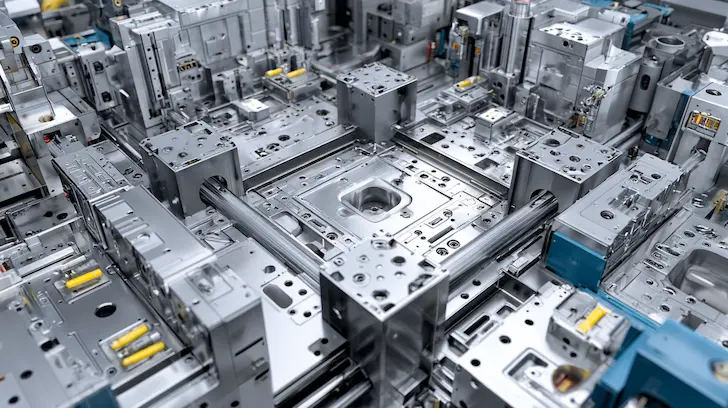
The culmination of the prototyping journey is the Golden Sample. This is the single most important physical asset in the entire licensed merchandise manufacturing workflow. The Golden Sample is the final, approved version of the product that has passed all creative, mechanical, and safety reviews.
The Master Reference for Mass Production and QC
The Golden Sample Development Process creates a "contractual benchmark." Once approved, this sample is locked in a secure environment and serves as the master reference for our AQL inspection in toy manufacturing. Mass-produced units are compared directly against the Golden Sample for color accuracy, weight, joint tension, and finish. Having a physical Golden Sample ensures that there is zero ambiguity during the OEM manufacturing phase, protecting your brand from "quality fade" during long production runs.
2026 High-Fidelity 3D Printing (SLA/SLS) for Marketing
In 2026, the Golden Sample also serves a secondary, vital purpose: marketing. We utilize Advanced SLA and SLS (Selective Laser Sintering) technology to create high-fidelity, "Hero Samples" for trade shows, catalog photography, and movie launch promotions. These samples are indistinguishable from injection-molded units but can be produced weeks before the actual molds are finished. This allows our clients to begin their global distribution for licensed products strategy and secure retail pre-orders while the factory is still in the tooling phase.
Don't guess—validate your vision with precision.
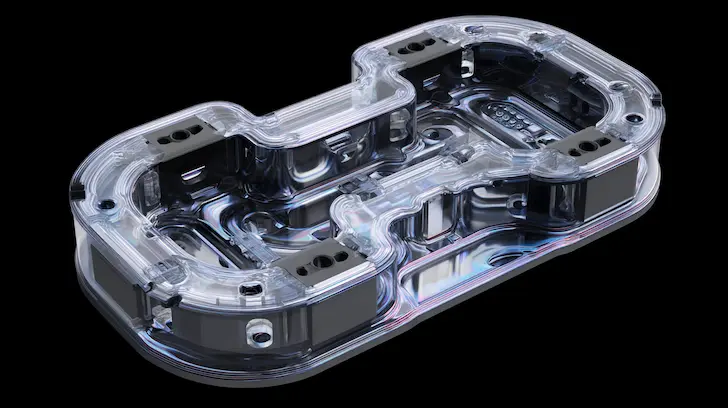
Our Toy Prototyping Manufacturer services slash development time by up to 40% using 2026 technology. See our [Golden Sample Development Process] in action or learn more about our [Design for Mass Production (DFM)] strategies. Explore Prototyping Solutions.
Design for Mass Production (DFM):
Optimizing for Efficiency
A brilliant prototype is only successful if it can be manufactured efficiently at scale. Design for Mass Production (DFM) is the engineering discipline of refining a design to make it as easy, fast, and cost-effective to produce as possible without compromising quality. At Unstoyppable, DFM is integrated into every step of our engineering and prototyping phase.
Simplifying Assembly to Reduce Error and Cost
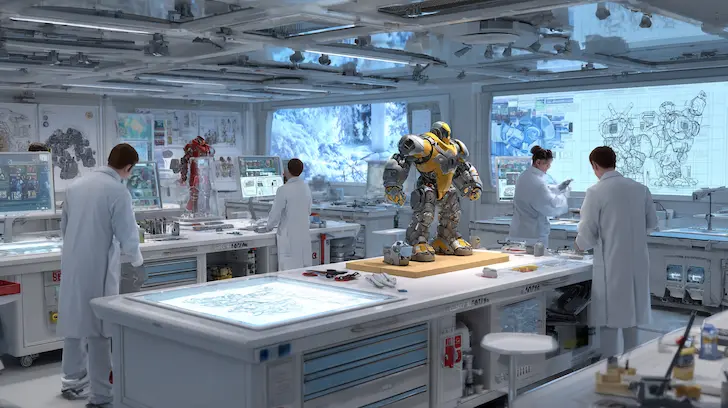
During the DFM review, our engineers look for ways to simplify the toy manufacturing logistics. We aim to reduce the total part count by combining components where possible and designing "self-aligning" parts that can only be assembled in one way. This "Poka-Yoke" (mistake-proofing) approach drastically reduces human error on the assembly line, ensures consistent quality, and lowers the overall landed cost in manufacturing for our clients.
Draft Angles and Wall Thickness Optimization
For a product to be successfully injection molded, it must follow specific geometric rules. We meticulously calculate and implement Draft Angles—a slight taper on the sides of the part—which allows the plastic to slide out of the steel mold without friction or damage. We also optimize Wall Thickness to ensure even cooling. Uniform walls prevent "sink marks" (dents in the plastic) and warping, ensuring that every piece of your custom licensed product development project is structurally perfect and aesthetically flawless.
Optimizing Material Flow and Gate Placement
Our DFM experts use mold-flow simulation software to determine the best "gate" locations—the points where molten plastic enters the mold. By optimizing these locations, we ensure that the plastic fills the cavity completely and evenly, preventing weak points or "knit lines" in the material. This technical foresight is what allows Unstoyppable to maintain such high standards as a licensed toy manufacturer in China, ensuring that your production run is smooth, predictable, and exceptionally high-quality.
The journey from a digital concept to a physical masterpiece is a precision-driven process. By mastering rapid prototyping and the Golden Sample process, we provide you with the confidence to move into the mold development and injection tooling phase with total peace of mind. We invite you to explore our Custom Licensed Product Development and Toy Manufacturing Process pages to see how we carry this excellence through to final delivery.
Precision Tooling:
The Heart of Mass Production
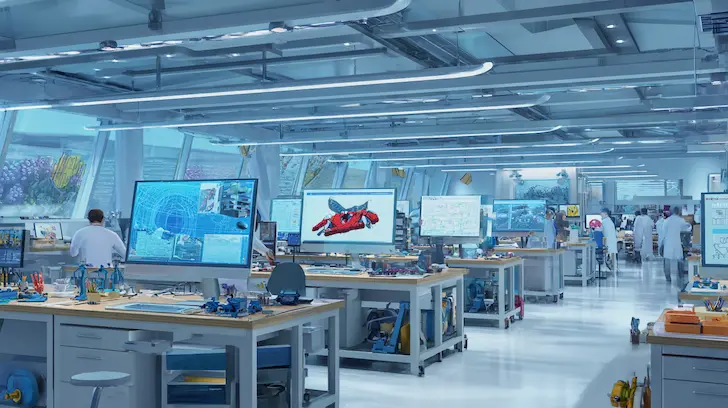
In the world of high-volume licensed product manufacturing, the transition from a hand-painted prototype to a million-unit retail run is made possible by the precision of steel tooling. Engineering a toy for mass production is an art form that requires deep technical expertise in thermodynamics, material science, and mechanical engineering. At Unstoyppable, we view mold development as an investment in your brand’s reputation. A high-quality mold ensures that every unit—from the first to the ten-millionth—maintains the same crisp detail and structural integrity that defined your Golden Sample. By utilizing 2026's most advanced toy manufacturing technology, we deliver tooling solutions that optimize cycle times and ensure your entertainment merchandise manufacturing project stays on schedule and under budget.
Choosing the Right Material:
Al-Mold vs. Steel-Mold
For every project, we evaluate the projected volume to determine the ideal mold substrate. While Aluminum Molds (Al-Mold) offer a lower entry cost and faster fabrication time—making them excellent for low-volume specialty runs or limited-edition collectibles—they have a shorter lifespan. For true OEM manufacturing solutions at scale, we utilize high-grade Steel Molds. We use P20 steel for standard production and S136 stainless steel for high-gloss or transparent parts that require extreme corrosion resistance and a life-cycle of over 500,000 shots. These steel tools provide the thermal stability required for consistent 24/7 production, protecting your IP security by ensuring the final products never lose their sharp, "on-model" features.
Efficiency Through Multi-Cavity Molds
To reduce your per-unit cost, we specialize in Multi-Cavity Mold design. By engineering a single mold to produce multiple parts (or multiple sets of parts) in a single injection cycle, we drastically increase output and reduce the landed cost in manufacturing. Our mold development and injection tooling process includes sophisticated "runner" systems that ensure molten plastic reaches every cavity simultaneously, preventing the imbalances that cause part variation. This is the Unstoyppable standard for efficiency.
Enhancing Tactile Appeal with Over-molding
2026 consumers expect premium textures. We utilize Over-molding techniques to create multi-material parts in a single process. This allows us to bond a soft TPE (Thermoplastic Elastomer) rubber grip directly onto a rigid ABS toy body. Whether it is a soft-touch handle on a role-play wand or flexible hair on a PVC figure manufacturer project, over-molding provides a superior, integrated feel that cannot be achieved through traditional assembly, enhancing both the safety and the perceived value of your licensed merchandise.
Precision is the difference between a toy and a collectible.
Our Mold Development & Injection Tooling team is ready to bring your engineering blueprints to life. Explore our Tooling Capabilities or request a quote for Advanced Toy Tooling R&D.
Advanced Toy Tooling R&D:
2026 Innovations
The 2026 manufacturing landscape is defined by "Smart Tooling." At Unstoyppable, we stay ahead of the curve by integrating Advanced Toy Tooling R&D into our partner BSCI audited toy factories. These innovations allow us to solve complex design challenges that were previously considered impossible in mass production.
Conformal Cooling:
Reducing Cycle Times and Warping
Traditional molds use straight cooling channels, which often leave "hot spots" in complex toy geometries. We utilize Conformal Cooling—3D-printed metal mold inserts with cooling channels that follow the exact contour of the toy part. This ensures perfectly even cooling, which eliminates warping and sink marks while reducing cycle times by up to 30%. For our clients, this translates to faster lead times for seasonal manufacturing and a more consistent product that meets the highest toy quality and safety compliance standards.
Laser Texturing for Realistic Skin and Fabric
To achieve the ultra-realistic textures found in modern collectible figure manufacturing, we utilize Laser Texturing on our steel molds. Instead of traditional chemical etching, a high-precision laser carves microscopic patterns directly into the steel. This allows us to replicate the exact grain of leather, the weave of fabric, or the pores of character skin directly onto the plastic surface. These details are permanent and incredibly crisp, ensuring that your character product manufacturing stands out in a crowded retail environment.
Frequently Asked Questions (FAQ) - Engineering & Prototyping
What is the difference between a Visual Prototype and an Engineering Prototype?
A Visual Prototype (Looks-Like) focuses on the aesthetic appeal, proportions, and character likeness using high-resolution resin. An Engineering Prototype (EP) (Works-Like) uses materials and assembly methods that mirror the final mass production process to test mechanical durability, electronics, and safety function before mold development begins.
How long does the mold development process take?
For most licensed toys, the mold development and injection tooling process takes between 35 to 45 days. This timeline includes the creation of the steel tool, the T1 (first-off-tool) sample review, and subsequent refinements to ensure 100% perfection before mass production.
What is DFM (Design for Manufacturing) and why is it important?
Design for Mass Production (DFM) is the process of optimizing a toy's design so it can be manufactured easily and cost-effectively. It is critical because it reduces part counts, ensures parts eject easily from molds (via draft angles), and eliminates manufacturing defects, ultimately lowering your landed cost.
How do you ensure the prototype matches the final mass-produced toy?
We utilize the Golden Sample Development Process. Once a hand-made prototype is approved by the brand owner, it is locked as the "Master Reference." All mass production units are audited against this Golden Sample to ensure colors, weights, and functions match within strict AQL inspection tolerances.