Third-Party Toy Lab Testing:
The Gold Standard of Industrial Verification
In the global ecosystem of licensed merchandise, the distance between a manufacturing facility and a retail shelf is measured by the rigor of its validation. Third-party toy lab testing is the definitive benchmark of excellence, serving as the ultimate arbiter of safety and compliance. At Unstoyppable, we recognize that while internal quality control is essential for operational efficiency, only independent toy safety verification provides the legal and ethical "shield" required by world-class IP holders. For brands operating in 2026, the regulatory landscape is more complex than ever, necessitating a partnership with an accredited toy testing laboratory that possesses the technical authority to certify products for North American and European markets. This section explores why independent oversight is the non-negotiable pillar of our production philosophy, ensuring that your brand’s reputation remains as resilient as the products we create.
Beyond In-House Checks:
The Authority of ISO/IEC 17025 Accreditation
Internal factory testing is a vital component of the daily production routine, allowing for real-time adjustments to injection molded toy manufacturer parameters. However, for a product to achieve the status of "Retail Ready," it must pass through an accredited toy testing laboratory. Accreditation under ISO/IEC 17025 is the international gold standard that ensures a laboratory has the technical competence and impartiality to produce valid results.
The Legal Shield for IP Holders
Utilizing CPSC accepted lab testing is a strategic move that shifts the burden of proof from the brand owner to a verified scientific entity. When an independent lab certifies that a product meets ASTM F963 DFM compliance, it provides an evidentiary layer that protects the license holder in the event of regulatory scrutiny. This external validation is the only way to satisfy the demanding safety departments of entertainment giants and major retailers. By insisting on third-party toy lab testing, Unstoyppable ensures that every character-driven product is backed by an unassailable record of safety.
Preventing the "Conflict of Interest" Trap
Independent verification eliminates the inherent conflict of interest that exists when a factory tests its own output. An accredited toy testing laboratory operates without the pressure of production deadlines or material cost concerns. Their only objective is the accurate assessment of the toy’s physical and chemical properties. This impartiality is what transforms a simple toy into a globally compliant asset, ready for distribution in the most sensitive markets.
The Regulatory Gateway:
Certificates of Compliance (CPC & DoC)
For any licensed product, third-party toy lab testing is the technical gateway to the global market. Without the specific data sets generated by an accredited toy testing laboratory, the mandatory legal documents required for import and sale cannot be issued.
The Children’s Product Certificate (CPC) for the USA
In the United States, the Consumer Product Safety Improvement Act (CPSIA) requires a Children’s Product Certificate for all toys. This certificate is valid only if it is based on CPSC accepted lab testing results. Our process ensures that all physical and mechanical toy testing and chemical analysis are performed by labs that are recognized by the CPSC. This meticulous documentation is what allows our clients to pass through US Customs without delay and list their products on platforms like Amazon with absolute confidence.

The Declaration of Conformity (DoC) for Europe
Similarly, for the European market, the Declaration of Conformity is the manufacturer’s signature that the product meets EN71 design optimization and safety standards. This declaration must be supported by a technical file that includes comprehensive third-party toy lab testing reports. By managing this toy compliance testing services workflow, Unstoyppable provides a turnkey solution that secures the CE mark for your toys, ensuring they are "compliant by design" and "safe by verification."
Secure Your Brand’s Future
Excellence in production is only complete with excellence in verification. Ensure your toy production is backed by world-class, independent lab verification today.
The Golden Sample vs. Mass Production:
Ensuring Real-World Accuracy
A common pitfall in the industry is testing "hero samples"—hand-made prototypes that represent the best possible version of a product but do not reflect the reality of the assembly line. Our toy compliance testing services focus on "production-grade" units to ensure that the data we provide is honest and actionable.

Combatting "Quality Fade" Through Periodic Testing
Safety is not a one-time event; it is a continuous obligation. As an EN71 compliant toy manufacturer, we implement periodic third-party toy lab testing throughout the lifecycle of a product. If a production run lasts for several months, we pull samples at regular intervals to verify that the non-toxic toy materials and chemical signatures remain consistent. This prevents the gradual introduction of unauthorized additives or structural weaknesses, providing an ongoing guarantee of quality for the IP holder.
Risk Mitigation for Licensees:
Protecting Royalty Streams and Brand Health
For a licensee, the financial impact of a product recall extends far beyond the cost of the goods. It involves legal fees, retailer penalties, and the catastrophic loss of consumer trust. Third-party toy lab testing is the most cost-effective insurance policy a brand can hold.
The High Cost of Non-Compliance
A single failure in heavy metal migration testing or a "small parts" violation can trigger a CPSC or RAPEX alert, effectively shutting down a brand’s presence in an entire region. By utilizing accredited toy testing laboratory services from the outset, Unstoyppable mitigates these risks. We ensure that your royalty streams are protected from interruptions and that your brand remains associated with quality and care. In the competitive world of media franchises, being the "safe" choice is a powerful market differentiator.

Building Long-Term Retailer Relationships
Retailers like Target, Walmart, and Disney Stores have their own internal safety auditors. They prioritize manufacturers who can provide a complete library of third-party toy lab testing reports. By delivering independent toy safety verification as a standard part of our OEM manufacturing solutions, we help our clients build stronger, more profitable relationships with the world’s leading toy buyers. Your compliance record becomes a testament to your brand’s integrity, paving the way for future IP expansions and retail success.
The Final Verdict: In the eyes of a regulator, a toy is only as safe as its most recent lab report. By making third-party toy lab testing the heart of our toy quality assurance protocols, Unstoyppable provides the transparency and technical rigor required to scale your IP globally. Trust the science, protect the brand, and ensure your products are truly "Unstoyppable."
Rigorous Testing Protocols:
Mechanical Durability and Chemical Purity
The transition from a manufacturing blueprint to a retail-ready product requires a transition through intense scientific scrutiny. At Unstoyppable, our third-party toy lab testing workflow is designed to simulate years of intense play and environmental exposure in a condensed, clinical setting. This phase is defined by "Destruction Testing"—a process where independent toy safety verification experts attempt to find the breaking point of every component. By subjecting our injection molded toy manufacturer outputs to these extreme conditions, we verify that the polymer selection, such as high-impact ABS and flexible TPE, performs exactly as engineered. This scientific rigor ensures that every licensed product remains a safe embodiment of the IP it represents, meeting all global benchmarks for mechanical durability and molecular purity.
Physical Abuse Simulations:
Engineering Structural Resilience
Mechanical safety is the first line of defense in toy manufacturing. Our labs utilize calibrated machinery to perform toy tensile strength testing and abuse simulations that mirror the unpredictable nature of childhood play.
The Torque and Tension Test for Articulated Figures
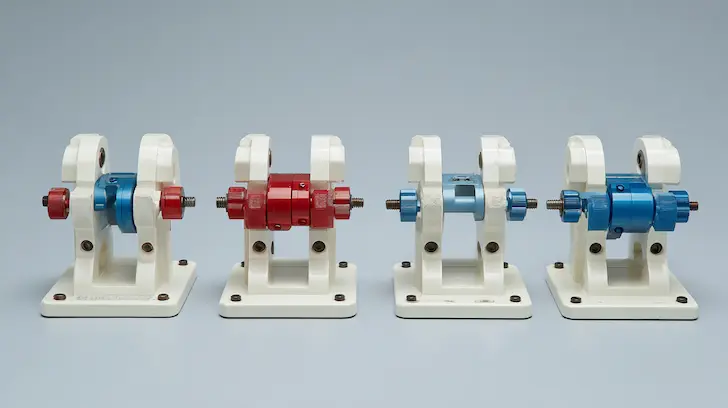
For articulated action figures and complex character products, the joints and limbs are high-priority zones. Labs apply a specific amount of rotational force (torque) and linear pull (tension) to these components. As a leading ASTM F963 compliant manufacturer, we engineer our toy prototyping manufacturer samples to withstand forces exceeding 70 Newtons. This ensures that limbs remain securely attached to the torso, preventing the creation of hazardous small parts. We utilize high-grade resins like Polycarbonate or reinforced ABS for internal joint pegs, providing the structural backbone necessary to pass these rigorous mechanical screenings.
Drop Testing for Injection-Molded Resins
The "Drop Test" is the ultimate challenge for brittle materials. Production-grade samples, often crafted from ABS/PC blends for their superior impact resistance, are dropped multiple times from heights up to 4.5 feet onto a rigid tile-on-concrete surface. The lab inspects the toy for any shattering or splintering. At Unstoyppable, our toy material engineering includes optimizing wall thickness and internal ribbing to dissipate impact energy. This technical precision ensures that even if the toy is subjected to high-velocity impacts, the material flexes rather than fractures, maintaining its safety profile and structural integrity.
Molecular Analysis of Coatings:
Scrutinizing the Surface Layer
While the internal plastic provides the strength, the surface finishes—including paints and decorative films—must be chemically inert. Heavy metal migration analysis is performed at the molecular level to ensure zero toxicity.
Printing Film Chemical Stability and Scratch Resistance
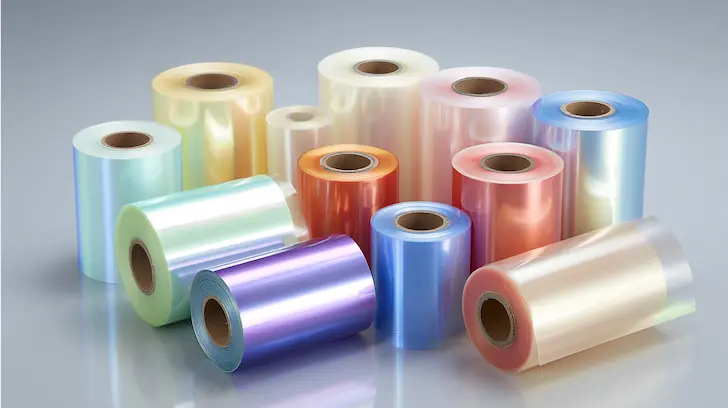
Traditional wet-spray painting is often replaced by advanced printing film for toy materials to ensure a more stable chemical bond. In the lab, technicians perform "cross-hatch" adhesion tests and "solvent rub" tests to verify the printing film chemical stability. This ensures that the graphics cannot be easily removed by friction or saliva. Furthermore, the film is scraped and analyzed via Inductively Coupled Plasma (ICP) spectroscopy to ensure that no lead, cadmium, or volatile organic compounds (VOCs) are present. This level of non-toxic toy materials verification is essential for maintaining the high aesthetic standards of media franchises while meeting EN71-3 migration testing requirements.
Soluble Element Migration Analysis
Chemical safety is not just about the presence of a substance, but its "bio-availability." Labs simulate the acidic environment of a child's stomach to measure the migration of 19 heavy metals. By utilizing virgin resins and food-contact grade pigments, our production consistently results in migration levels that are a mere fraction of the legal limits. This proactive approach to heavy metal migration analysis is a cornerstone of our toy quality and safety compliance, ensuring your IP is safe for consumers of all ages.
Don't Guess—Verify Your Safety
Safety is found in the molecular data. Explore our advanced material engineering and see how we pass the most rigorous lab screenings in the industry.
Explore Material Science | Learn About Phthalate-Free Standards
Soft Goods and Plush Verification:
Seams and Thermal Safety
For toys that utilize fabrics, synthetic fibers, or plush materials, the testing protocols pivot toward seam integrity and thermal resistance. As an ethical toy manufacturing China partner, we ensure all "soft" elements are as secure as our "hard" goods.

Seam Strength and Pull-Force Testing
Every plush toy undergoes toy tensile strength testing on its seams and attachments. Labs utilize "force gauges" to pull on eyes, noses, and decorative elements with up to 20 lbs of force. We utilize specialized "locking-washer" systems for eyes and high-density stitching for seams to ensure that no component can be pulled free to become a choking hazard. This toy compliance testing services focus is what allows our plush products to be labeled safe for infants and toddlers in the EU and USA.
ASTM and EN71 Flammability Requirements
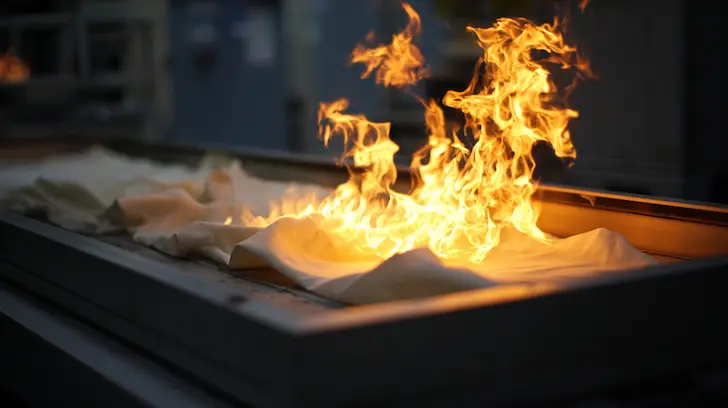
Thermal safety is paramount for fabric-based toys. Toy flammability testing involves exposing the material to a standardized flame and measuring the rate of spread. We utilize inherently flame-retardant synthetic fibers that melt away from heat sources rather than igniting. This ensures that our soft goods manufacturing projects meet the strict flammability benchmarks of both the ASTM F963 and EN71 Part 2 standards, providing a comprehensive safety solution for global brands.
The Small Parts Cylinder:
The Definitive Check for Under 3 Safety
The most iconic tool in any accredited toy testing laboratory is the "Small Parts Cylinder." This device is the definitive measure for preventing choking hazards in toys intended for children under 36 months.
Technical Dimensions of the Choking Hazard Test
Any toy component that fits entirely within the cylinder (31.7mm in diameter and 57.1mm in depth) is classified as a "small part." Our design for mass production (DFM) team uses these dimensions as a hard constraint during the CAD phase. If a character accessory is close to these dimensions, we either enlarge the part or engineer it to be non-detachable through overmolding or secure mechanical fasteners. In the lab, the toy is subjected to abuse testing first, and then the cylinder is used to verify that no new small parts were created during the "destruction" process.
Phthalate Lab Screening and Endocrine Safety
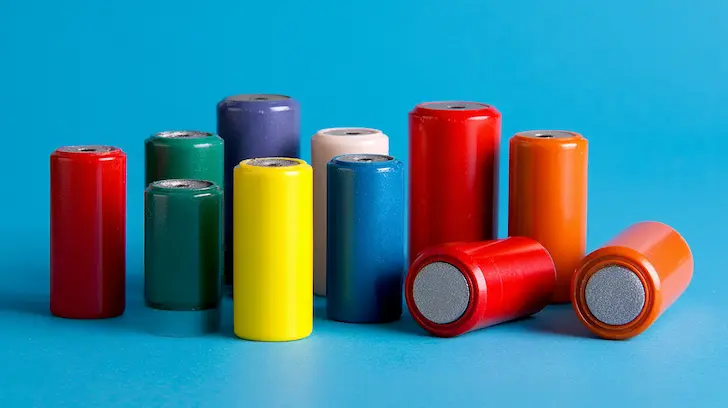
For toys made of soft PVC or TPE, phthalate lab screening is mandatory. Labs utilize gas chromatography-mass spectrometry (GC-MS) to ensure that the concentration of regulated phthalates (like DEHP, DBP, or BBP) remains below 0.1%. By utilizing exclusively phthalate-free toy materials in our production lines, Unstoyppable guarantees that every squeeze-toy or teething element is chemically safe for the most vulnerable users. This level of scientific scrutiny ensures that your brand is protected from the molecular level up, delivering a product that is as safe as it is innovative.

Science-Backed Production: At Unstoyppable, we believe that if a toy can be broken, it should be broken in the lab, not the playroom. Our mastery of toy tensile strength testing and heavy metal migration analysis ensures your IP is resilient, compliant, and ready for the global stage. Partner with us to transform manufacturing data into consumer trust.
Streamlined Lab Coordination:
Accelerating Your Path to Global Retail
In the high-stakes world of licensed product distribution, manufacturing a high-quality item is only half the battle. The final hurdle to market success is the meticulous verification of that product through a structured, transparent logistical framework. At Unstoyppable, we specialize in SGS toy testing coordination and multi-agency lab management to ensure that the transition from the assembly line to the shipping container is seamless. We recognize that for our clients, the complexity of retail-ready compliance documentation can be a significant bottleneck. Therefore, we act as the central nervous system for your compliance needs, managing the sampling, testing, and certification phases with industrial precision. By maintaining a transparent supply chain manufacturing model, we provide the empirical evidence required to satisfy the world’s most demanding customs authorities and retail buyers.
Turnkey Lab Management:
Offloading Complexity from the Brand Holder
Navigating the requirements of third-party toy lab testing involves significant technical overhead. Our logistical team takes full responsibility for this process, allowing you to focus on your IP development while we handle the heavy lifting of safety verification.
Strategic Sampling and Test Plan Selection
The success of a lab audit depends on the selection of the correct "test plan." We analyze your product’s materials—such as ABS, PVC, and printing film—and its intended age grade to determine exactly which ASTM, EN71, or ISO standards apply. We handle the secure shipment of "production-grade" samples to the lab, ensuring they are representative of the final mass-produced goods. This proactive SGS toy testing coordination prevents the common error of over-testing or under-testing, optimizing both your budget and your time-to-market.
Interpretation of 100+ Page Technical Reports
Modern Intertek lab reports and Bureau Veritas findings are often dense, multi-hundred-page technical dossiers. Our compliance officers digest these reports on your behalf, highlighting the key passing metrics and ensuring every component is accounted for. If a lab identifies a marginal pass, we immediately consult with our toy material engineering team to reinforce the production line. This turnkey management transforms raw data into actionable manufacturing intelligence, ensuring your retail-ready licensed product production is truly flawless.

The Logistics of Periodic Testing
For long-term production contracts, we perform "Periodic Testing" every 6 to 12 months or every 10,000 to 20,000 units. This involves pulling fresh samples from the line and submitting them for updated heavy metal migration analysis and mechanical abuse tests. This ongoing independent toy safety verification ensures that the materials sourced in month twelve are as pure as those used in month one. It is a vital component of our toy quality assurance protocols, providing a constant safety net for your retail partners.
Maintaining the Technical File Trail
Every batch test result is added to the toy technical file preparation dossier. This archive serves as your brand’s insurance policy. Should a market surveillance authority in the EU or USA ever request proof of consistency, we provide the documented history of every batch run. This level of secure supply chain for licensed products management is why the world’s leading entertainment franchises trust Unstoyppable to handle their most sensitive IP.
Bridge the Gap to the Retail Shelf
Your entry into global markets should be frictionless. Contact our compliance team to manage your next third-party testing cycle and secure your retail readiness.
Explore FAMA Factory Compliance | Master Toy Logistics & Customs
Clearing Customs with Ease:
The Documentation Bundle
Customs authorities at major US and EU ports utilize sophisticated risk-management systems to flag shipments. A complete retail-ready compliance documentation bundle is the key to bypassing these hurdles.

Preventing "Hold and Detain" Orders
We ensure that every shipment is accompanied by its corresponding Intertek lab reports or SGS certifications, along with the Children’s Product Certificate (CPC) for the US or the Declaration of Conformity (DoC) for Europe. By bundling these with the Bill of Lading and Commercial Invoice, we provide customs officers with everything they need to verify the shipment's safety instantly. This logistical foresight eliminates the risk of costly demurrage fees and "Hold and Detain" orders, ensuring your product reaches the consumer on schedule.

The FAMA Connection:
Integrating Social and Safety Audits
For licensors like Disney, Universal, and Warner Bros, safety is only one part of the equation. Social accountability is equally critical. We synthesize BV toy safety audits with ethical certifications to provide a holistic compliance profile.
Synchronizing Safety and Ethics
A FAMA compliant factory in China must be able to prove that its products are safe and that its workers are treated fairly. Our toy technical file preparation includes the social audit reports (BSCI or Sedex) alongside the physical lab reports. This combined "Social + Safety" dossier is the ultimate gold standard for licensed merchandise manufacturer success. It allows you to prove to your licensor that every unit produced is a reflection of their brand’s global values, from the carbon footprint of the injection molded toy manufacturer process to the final non-toxic finish.
Third-Party Lab Testing FAQ
Which third-party labs does Unstoyppable work with?
We maintain strong relationships with the world's most reputable accredited toy testing laboratories, including SGS, Intertek, Bureau Veritas (BV), and UL. These labs are CPSC accepted and ISO/IEC 17025 accredited, ensuring global recognition of all test reports.
How many samples are typically required for a full ASTM/EN71 test?
The requirement varies depending on the product’s complexity. Typically, a full suite of physical and mechanical toy testing and heavy metal migration analysis requires 6 to 12 production-grade samples. For electronic toys, additional samples may be needed for battery and electromagnetic compatibility (EMC) testing.
Does the lab test the packaging as well as the toy?
Yes. Retail-ready packaging manufacturer standards require that the inks and materials used in the packaging also undergo heavy metal testing. Furthermore, the lab verifies that all mandatory age-grading icons and warning labels are present and correctly formatted according to US toy safety standards or EU mandates.
What happens if a sample fails a specific test?
If a failure occurs, our toy material engineering team conducts a Root Cause Analysis (RCA). We adjust the molding parameters, material blend, or design geometry, and then submit a "re-test" sample. Because we perform pre-testing in the factory, failures at the third-party lab are rare, but we are fully equipped to manage the corrective action process swiftly.