Injection Molded Toy Manufacturer:
Engineering Durable Licensed Assets
In the landscape of 2026 global retail, the role of an injection molded toy manufacturer has shifted from simple assembly to complex material science. At Unstoyppable, we recognize that for world-class license holders, the physical integrity of a character is as vital as its visual design. High-fidelity custom plastic toy production China now requires a sophisticated understanding of polymer behavior, thermal dynamics, and chemical purity. We provide an engineering-first approach to high-precision injection molding, ensuring that every component—from the smallest gear to the main chassis—exhibits the exact mechanical properties required for safety, durability, and brand prestige.
Advanced Resin Selection:
The Building Blocks of Quality
The success of a licensed toy manufacturer China project is determined at the molecular level. Choosing the correct thermoplastic resin is not merely a matter of cost; it is a matter of mechanical intent. In our 2026 production facilities, we categorize resins based on their performance under stress, ensuring that ABS toy manufacturing is reserved for structural excellence, while specialized polymers handle functional requirements.
ABS (Acrylonitrile Butadiene Styrene) for Structural Rigidity
For the majority of high-end figures and playsets, ABS is the industry standard. This thermoplastic is prized for its high impact resistance and toughness. In ABS toy manufacturing, we utilize virgin-grade resins to ensure a high-gloss finish and a "heavy" hand-feel that denotes quality. Its superior dimensional stability allows our engineers to maintain tight tolerances, ensuring that multi-part assemblies fit together with a satisfying "click" that reflects premium toy craftsmanship.
PP (Polypropylene) and POM (Polyoxymethylene) for Functional Parts
When a design requires a "living hinge"—a thin section of plastic that can bend repeatedly without breaking—we utilize specialized Polypropylene (PP). Its fatigue resistance is unmatched for lids, caps, and folding components. For mechanical internal systems, such as gearboxes in electronic toy manufacturer projects, we deploy Polyoxymethylene (POM), also known as Acetal. POM provides the high stiffness, low friction, and excellent dimensional stability necessary for parts that must move smoothly against one another without wearing down over time.
2026 Bio-Polymer Integration:
Marrying Sustainability with Strength
As sustainability becomes a mandatory requirement for global retailers, Unstoyppable is leading the transition toward sustainable toy manufacturing through bio-polymer integration. By 2026, the challenge is no longer just using "green" materials, but ensuring those materials pass the same rigorous safety and durability tests as traditional oil-based plastics.
High-Performance Starch-Based Plastics
Our custom plastic toy production China now includes options for starch-blended resins and PLA (Polylactic Acid) derivatives that are engineered for the toy industry. These bio-polymers are modified to increase their impact strength, ensuring they pass "drop-test" compliance for ASTM F963 and EN71 standards. By utilizing these materials, license holders can market a verified ethical supply chain product that is biodegradable or compostable at its end-of-life without sacrificing the "unbreakable" quality consumers expect.
Maintaining Tensile Strength in Bio-Resins
The engineering hurdle with bio-plastics has traditionally been brittleness. In 2026, Unstoyppable utilizes specialized additives that enhance the molecular cross-linking within bio-resins. This ensures that the high-precision injection molding process results in a part with high tensile strength, capable of withstanding the torque and tension required for character product manufacturing. We bridge the gap between environmental responsibility and industrial-grade performance.
Don't Gamble with Material Integrity
In the 2026 market, material failure is a brand-killer. Partner with a manufacturer that understands the chemistry of success.
Consult Our Resin Engineers | Explore Non-Toxic Material Catalogs
Thermal Stability and Shrinkage Control:
The Math of Precision
High-precision plastic toy tooling China is a game of millimeters. One of the most complex aspects of high-precision injection molding is managing the thermal contraction of plastic as it cools from a molten state to a solid. Without precise mathematical modeling, parts will warp, sink, or fail to interlock.
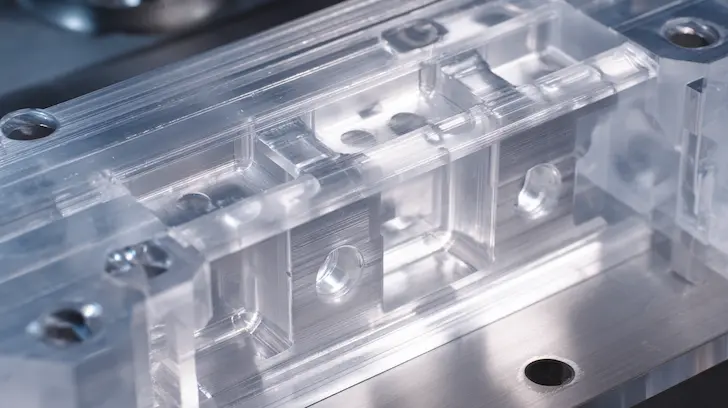
Advanced Cooling Line Engineering
To prevent "sink marks" (surface depressions) and warping, our molds feature conformal cooling channels. These are 3D-printed or precision-drilled paths that follow the geometry of the part, ensuring an even temperature drop across the entire surface. By maintaining thermal equilibrium, we ensure that the high-velocity toy injection molding process remains consistent across millions of cycles, providing our clients with retail-ready licensed products that are perfectly flat and dimensionally accurate.
Medical-Grade Purity:
Ensuring Zero Chemical Migration
In 2026, the definition of food-grade plastic toys has expanded to include a "medical-grade" mindset for all products intended for children. Unstoyppable utilizes high-purity virgin resins to eliminate the risk of contamination and chemical leaching.
Virgin Resins vs. Recycled Content
While we support recycled materials for structural non-contact parts, our toy safety testing China protocols mandate the use of medical-grade virgin resins for any surface intended for skin or mouth contact. These resins are free from heavy metals, bisphenols, and endocrine disruptors. By starting with a pure material, we ensure that the finished product exceeds CPSIA and REACH compliance, providing a "Clean-Plastic" guarantee for the end-consumer.
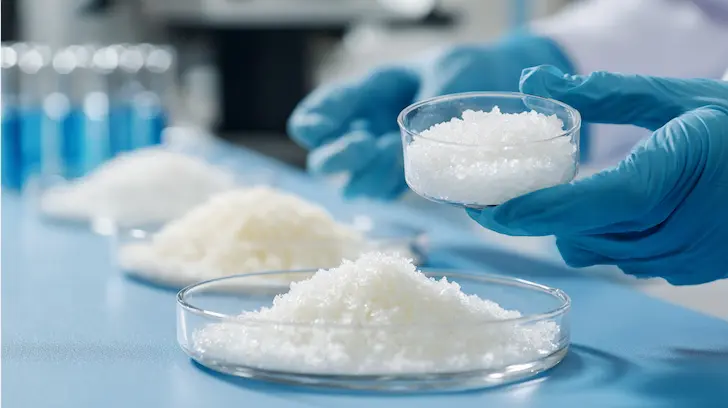
The "Clean-Room" Molding Environment
For high-sensitivity licensed merchandise manufacturer projects, such as infant teething toys or medical-educational kits, we offer molding in ISO-certified clean-room environments. This prevents airborne particulates or oils from contaminating the plastic during the injection molded toy manufacturer process. When we talk about food-grade plastic toys, we are referring to a level of purity that protects both the child and the license holder's reputation.
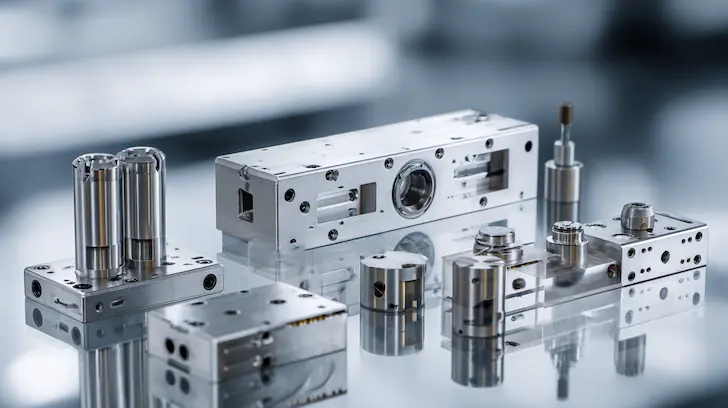
The Engineering Advantage: At Unstoyppable, we treat ABS toy manufacturing as a high-stakes engineering discipline. By combining advanced resin selection, shrinkage control mathematics, and medical-grade purity, we deliver a product that is not only character-accurate but industrially superior. Build your 2026 brand on the foundation of Unstoyppable’s material mastery.
Advanced Tooling Solutions:
Multi-Cavity Molds for Global Retail Scale
In the high-stakes environment of 2026 entertainment retail, the ability to scale from a prototype to millions of units in a matter of weeks is the defining factor of a successful product launch. At Unstoyppable, our high-speed toy injection molding infrastructure is engineered for velocity and cost-efficiency. We bridge the gap between complex character design and mass-market feasibility by utilizing advanced plastic toy tooling China strategies that maximize output while minimizing the per-unit investment. For brands managing global movie tie-ins or seasonal retail resets, our tooling solutions provide the industrial horsepower necessary to meet aggressive deadlines without a single compromise in aesthetic quality.
S136 Stainless Steel:
The Foundation of Tooling Longevity
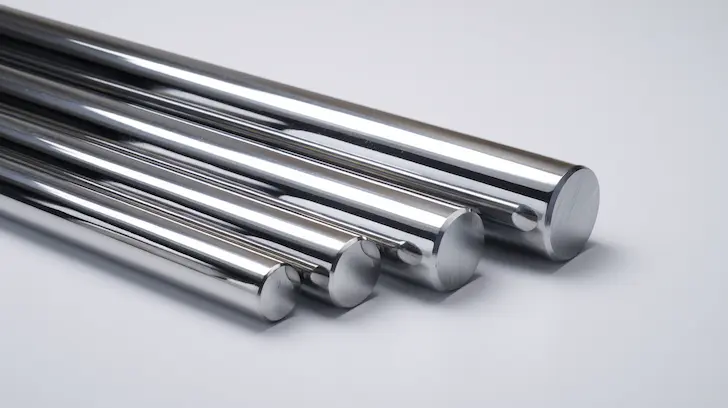
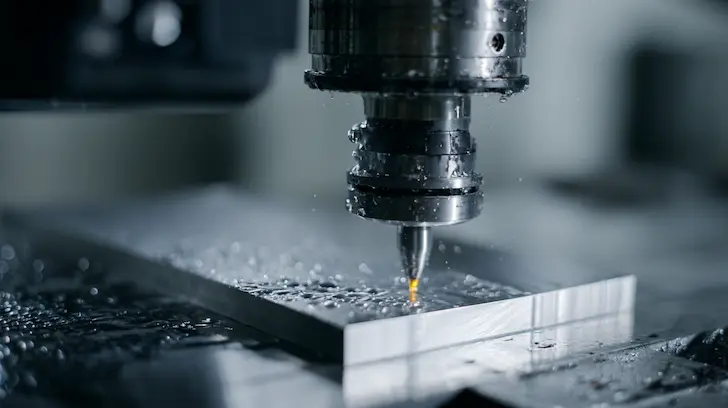
The lifespan and precision of an injection mold are entirely dependent on the metallurgy of its core. As a specialized injection molded toy manufacturer, we utilize high-grade S136 stainless steel for our production-grade tools. This Swedish-origin steel is the gold standard for 2026 manufacturing due to its exceptional hardness and resistance to the corrosive nature of certain thermoplastic resins.
Mirror-Polished Finishes and Flash Prevention
S136 steel is capable of achieving a mirror-polished finish, which is essential for producing the "high-gloss" surfaces required for premium licensed figures. More importantly, its extreme dimensional stability prevents the tool from deforming under the immense pressures of high-speed toy injection molding. This stability ensures that the parting lines remain perfectly tight, preventing "flash"—that excess plastic bleed often seen in lower-quality toys. By investing in S136 tooling, we guarantee a million-cycle tool life, ensuring that the 1,000,000th unit is as crisp and detailed as the first.
Resistance to Abrasive Additives
In 2026, many sustainable toy manufacturing resins utilize glass fibers or mineral fillers to enhance strength. These additives are highly abrasive to standard mold steels. Our S136 stainless steel tools are heat-treated to a Rockwell hardness (HRC) of 48-52, providing the wear resistance necessary to handle these modern materials. This durability ensures that the plastic toy tooling China process remains a one-time investment for the life of your product line, maximizing your long-term ROI.
The Multi-Cavity Advantage:
Exponentially Reducing Unit Costs
For high-volume promotional merchandise or "blind box" collectibles, the per-second cycle time of the machine determines the financial viability of the project. Unstoyppable specializes in the engineering of multi-cavity toy molds, which allow for the simultaneous production of multiple parts in a single injection cycle.
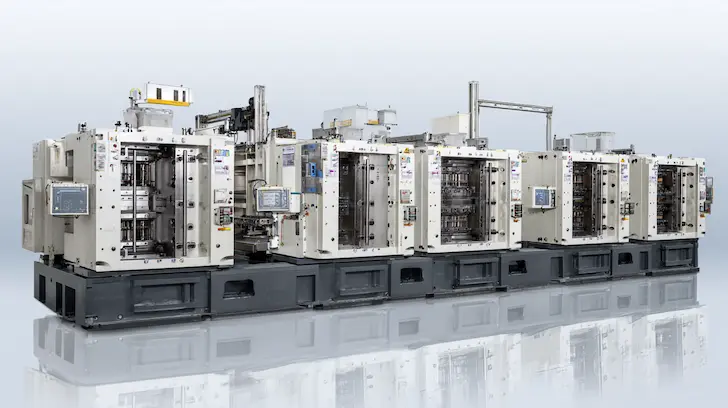
16-Cavity and 32-Cavity Engineering
By deploying 16-cavity or 32-cavity molds, we can produce dozens of parts every 15 to 20 seconds. This high-velocity toy injection molding approach drastically reduces the machine-time cost allocated to each unit. For massive retail rollouts, this scalability is essential. Our DFM for toy manufacturing (Design for Manufacturing) phase focuses on balancing the "runner system" within these complex molds to ensure that molten plastic reaches every cavity at the exact same pressure and temperature, guaranteeing uniform weight and quality across all parts.
Scalable Output for Movie Launches
When a global media franchise launches a film, the demand for merchandise is instantaneous and massive. Our automated injection molding lines are designed to run 24/7 with minimal human intervention. By utilizing multi-cavity toy molds, we provide the capacity to generate hundreds of thousands of units per week, ensuring that retail shelves remain stocked during peak demand periods. This is the industrial standard for entertainment merchandise manufacturing in 2026.
Accelerate Your Time-to-Market
In the world of licensed retail, timing is everything. Maximize your production ROI with our high-speed toy injection molding and multi-cavity expertise.
Explore Our Tooling Solutions | Learn About DFM Optimization
Hot Runner Systems:
Zero-Waste Efficiency in 2026
Traditional "cold runner" systems result in a "tree" of wasted plastic that must be trimmed and reground. In 2026, Unstoyppable prioritizes hot runner systems to enhance both sustainability and cycle speed. These systems keep the plastic in a molten state within the mold's distribution channels, injecting only the necessary material into the cavity.
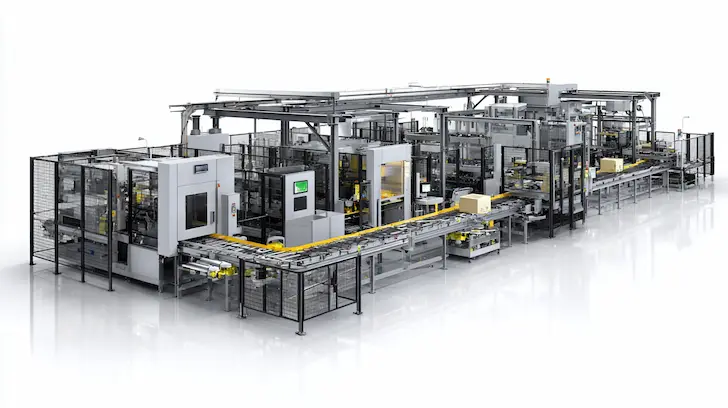
Eliminating Regrind and Material Waste
The use of hot runners ensures that 100% of the resin becomes the final product. This is a critical component of our sustainable toy manufacturing initiative. By eliminating the runner waste, we not only save on material costs for our clients but also ensure the molecular integrity of the plastic, as we do not need to rely on "regrind" (recycled waste) which can sometimes weaken the final toy's structure. This results in a high-precision injection molding process that is as clean as it is efficient.
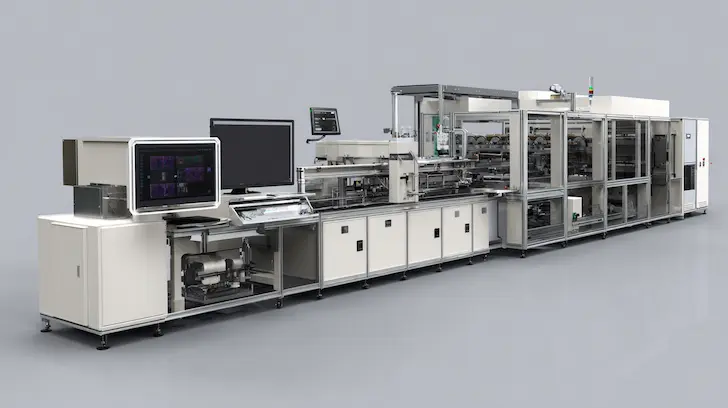
Reduced Cycle Times and Better Aesthetic Finishes
Hot runner systems allow for faster injection cycles because there is no "runner" that needs to cool and harden before ejection. This speed increase can improve production output by up to 20%. Furthermore, because the plastic stays at a consistent temperature until it hits the cavity, we significantly reduce "flow lines" and "knit lines," resulting in a superior aesthetic finish that is ready for pad printing for PVC figures or further decoration.
In-Mold Decoration (IMD):
Fusing Graphics with Plastic
For toys that require high-durability graphics—such as logos, eyes, or complex textures—standard surface printing can sometimes fail under heavy play. Unstoyppable utilizes In-Mold Decoration (IMD), a process where a specialized printing film is inserted into the mold before injection.
Unbreakable Graphics via Printing Film
During the injection cycle, the molten plastic is forced against the printing film, effectively fusing the ink into the surface of the part. This results in a graphic that is "trapped" under a thin layer of plastic or integrated into the molecular structure. This 2026 technique ensures that your character's details are permanent—they will not peel, scratch, or fade over time. This is the preferred solution for custom plastic toy production China projects where longevity is a core brand promise.
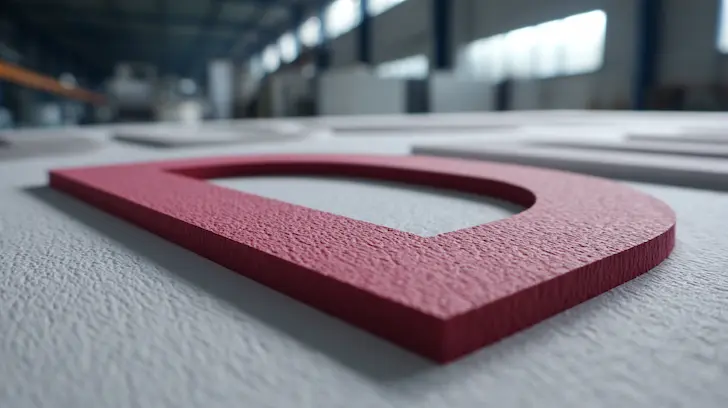
Complex 3D Surface Patterning
IMD allows us to apply high-definition patterns—such as carbon fiber, wood grain, or multi-color gradients—to complex 3D surfaces that would be impossible to reach with standard pad printing. By utilizing vacuum-formed printing film that matches the mold's geometry, we ensure $100\%$ coverage and perfect alignment. This technological edge allows your licensed merchandise manufacturer projects to stand out with visual complexities that competitors cannot replicate.
The Industrial Advantage: At Unstoyppable, we believe that efficiency is the byproduct of superior engineering. By combining S136 steel tooling, multi-cavity toy molds, and In-Mold Decoration, we provide a high-velocity toy injection molding environment that protects your margins and your brand's reputation. Trust the shop floor where technology meets scale.
Automated Compliance:
Ensuring Zero-Defect Safety in Injection Molding
In the high-stakes landscape of 2026, the final phase of production serves as the ultimate gatekeeper for brand integrity. At Unstoyppable, we recognize that for global license holders, a single defective unit is a significant liability. Our automated quality control toys protocols are designed to eliminate human error through a sophisticated "Digital Thread" that tracks every component from the resin silo to the retail shelf. By integrating real-time monitoring and robotic stress-testing, we ensure that your products exceed ASTM F963 injection molded toys standards and European EN71 requirements. We provide a fortified shield against recalls, ensuring your licensed product safety is mathematically guaranteed before the first container is ever sealed.
AI-Driven Vision Systems:
The Future of Surface Integrity
Manual inspection is a relic of the past in 2026. To maintain the high-precision injection molding standards expected by premium entertainment brands, Unstoyppable utilizes AI-driven vision systems. These high-speed cameras are mounted directly onto our automated injection molding lines, scanning 100% of the output in real-time.
Real-Time Defect Detection at 0.1mm Resolution
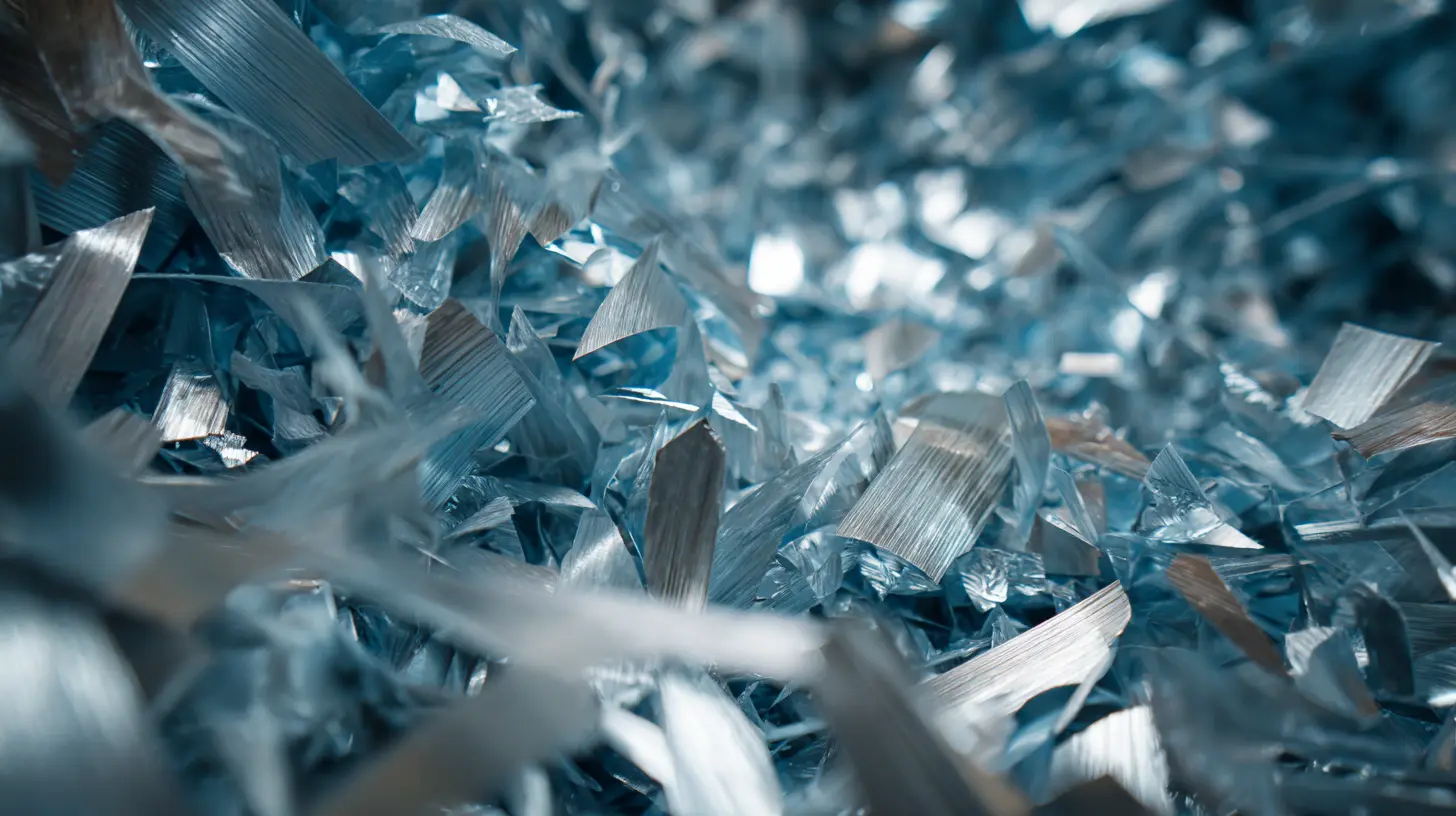
Our neural-network-trained cameras detect surface imperfections as small as $0.1mm$. This includes identifying "silver streaks," minor flash, or "short shots" that the human eye might miss during high-speed toy injection molding. By catching these variances at the source, our system automatically diverts sub-standard parts for recycling, ensuring that only flawless components proceed to the multi-part figure assembly stage. This level of automated quality control toys is essential for maintaining the prestige of high-end collectibles and licensed assets.
Chromatographic Color Consistency
Color accuracy is non-negotiable for character product manufacturing. Our vision systems utilize advanced colorimeters to verify that the Pantone shades of the plastic resin remain consistent across a million-unit production run. If a shift in the masterbatch concentration is detected, the system alerts our engineers instantly. This ensures that every character off the line perfectly matches the brand’s style guide, providing character-accurate soft toys and figures that satisfy the most demanding fans.
Automated Tension and Torque Rigs
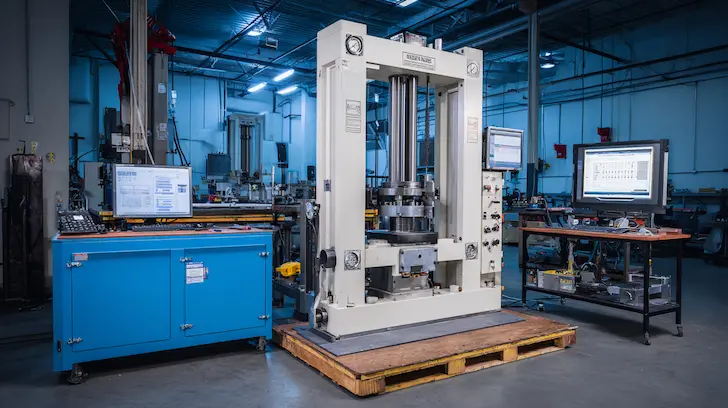
Every batch undergoes automated tension and torque testing that simulates years of aggressive play in a matter of seconds. Our robotic rigs apply precise Newtons of force to limbs, heads, and accessories to ensure no component can be detached or broken into a choking hazard. This data is logged directly into our ERP production tracking system, providing a permanent record that your ASTM F963 injection molded toys are structurally superior. We turn safety from a checkbox into a core engineering achievement.
Impact and Drop-Test Compliance
Using high-speed gravity-drop simulators, we verify that our ABS toy manufacturing blends maintain their integrity even when dropped from heights exceeding standard consumer-safety requirements. This "Over-Engineering" approach ensures that even under extreme circumstances, your product remains intact, protecting both the child and your brand’s reputation for quality in custom plastic toy production China.
Secure Your Brand's Future
In 2026, compliance is not an option—it is a competitive necessity. Partner with a manufacturer that treats licensed product safety as a core engineering discipline.
Digital Product Passport (DPP) & Anti-Counterfeit DNA
The 2026 regulatory shift has introduced the mandatory digital product passport manufacturing (DPP) requirement. Unstoyppable has turned this legal necessity into a powerful tool for IP security and transparent supply chain manufacturing.
Laser-Etched Data Matrix Integration
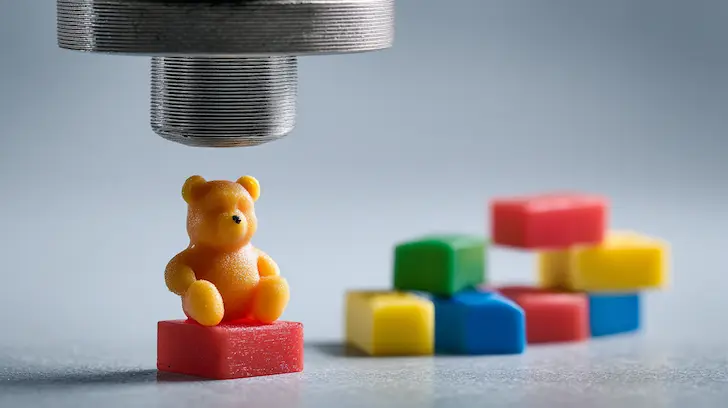
We utilize high-precision CO2 lasers to etch a unique Data Matrix code onto a hidden surface of every injection-molded part. This code is the physical entry point to the digital product passport toys. Scanning this code provides instant access to the product's entire compliance history—including CPSIA and EN71 lab results, material origin certificates, and factory audit data. This "Digital Thread" ensures that your licensed toy manufacturer China operations are fully transparent and ready for any customs audit in the US or EU.

Anti-Counterfeit "DNA":
Molecular Authentication
To provide 100% IP security, Unstoyppable offers the integration of microscopic chemical tracers—what we call "Anti-Counterfeit DNA"—directly into the plastic resin during the injection molded toy manufacturer process. These tracers are invisible and do not affect the plastic’s mechanical properties. However, they can be detected by a specialized handheld scanner at any point in the global supply chain. This allows you to instantly prove licensed product authenticity and distinguish genuine goods from unauthorized "backdoor" production or counterfeits. We provide the technical evidence to defend your IP globally.
Injection Molded Toy Manufacturing FAQ
What is the best plastic for injection molded toys?
For 2026 standards, ABS (Acrylonitrile Butadiene Styrene) is the premier choice for rigidity and impact resistance. However, for moving parts, POM (Acetal) is used for its low friction, and PP (Polypropylene) is ideal for flexible "living hinges." We always recommend virgin, medical-grade plastics to ensure zero chemical migration and maximum durability.
How do you prevent "sink marks" in thick plastic toy parts?
Sink marks are prevented through advanced mold development & injection tooling techniques. We utilize conformal cooling channels to ensure even temperature distribution and adjust "packing pressure" in the mold to compensate for plastic shrinkage. Our DFM for toy manufacturing process also suggests "coring out" thick sections to maintain uniform wall thickness.
What is the typical lead time for injection mold tooling in China?
A high-precision steel mold (S136 grade) typically takes 35 to 50 days to complete. This includes the engineering design phase, CNC machining, EDM (Electrical Discharge Machining), and the initial "T1" sample shots for your approval. We offer expedited plastic toy tooling China services for time-sensitive global movie launches.
How does Unstoyppable ensure the security of my proprietary molds?
We maintain strict IP protection in China manufacturing protocols. Molds are housed in Disney FAMA & BSCI certified facilities with 24/7 biometric access. We perform real-time fabric/resin reconciliation and utilize GPS-tracked mold storage. Furthermore, our legal agreements include non-compete and non-circumvention clauses to ensure your proprietary tooling is used exclusively for your authorized production.