How to Protect IP When Manufacturing in China:
The Proactive Registration Strategy
In the landscape of 2026 global commerce, the most significant risk to a brand's intellectual property isn't just the act of counterfeiting itself, but the failure to secure legal ownership within the territory of production. A common misconception among international brands is that having a registered trademark in the United States, Europe, or at the WIPO level grants automatic protection globally. In reality, intellectual property rights are strictly territorial. For any brand utilizing oem licensed product manufacturing, protect IP manufacturing China begins with one fundamental truth: ownership is not granted to the original creator, but to the first entity to file with the China National Intellectual Property Administration (CNIPA). This "First-to-File" system means that a proactive registration strategy is the only reliable defense against "trademark squatters" and bad-faith registrations. By the time you enter your first sourcing meeting or share a tech pack with a potential vendor, your legal shield must already be in place. Ownership starts with registration, and at Unstoyppable, we guide our partners through this critical pre-production phase to ensure their brand protection China manufacturing is airtight from day one.
The First-to-File Reality:
Securing Your Territory
China's legal framework for intellectual property is designed to reward speed and formal registration. Understanding how this affects your manufacturing journey is essential for long-term IP security.
Why "Squatting" Remains a Risk in 2026
Even with the stricter "bad-faith" regulations introduced in the mid-2020s, "trademark squatting" persists as a sophisticated industry. Professional squatters monitor international trade shows and digital style guides to identify rising IPs that have not yet registered in China. If a third party registers your brand name or character before you do, they effectively hold the "gatekeeper" rights to manufacture or export those goods. This can lead to your legitimate shipments being seized at the border for "infringing" on the squatter's registered mark. To protect IP manufacturing China, you must file your applications months before any public disclosure. This preventative measure ensures that you, and only you, hold the exclusive right to use your IP for licensed product manufacturing within the country.
The Pre-Sourcing Protective Filing
It is a best practice to file for protection before you even begin the "Request for Quotation" (RFQ) process. Sharing a character design or a brand logo with a factory—even under a verbal agreement—creates a vulnerability. By filing early, you establish a priority date that serves as an immutable legal record of your claim. This is especially vital for character product manufacturing, where the visual identity of a mascot or hero is the brand's most valuable asset. Our ip-security-factory-compliance.php protocols emphasize that the most secure factory relationship is one where the factory knows the client already holds the "Master Certificate" of registration.
The Triple Threat of Registration:
Trademarks, Patents, and Copyrights
Comprehensive brand protection China manufacturing requires a multi-layered approach. You must protect the name, the function, and the artistic expression of your product simultaneously.
1. Trademark Registration:
The Brand Identity
Your trademark is your "flag" in the market. In China, it is essential to register not only your original English brand name but also a Chinese transliteration or a "Chinese name." Local consumers and factory workers will inevitably refer to your brand in Mandarin; if you do not define that name yourself, the market (or a squatter) will do it for you. Registering your logo, wordmark, and any sub-brands across relevant "Nice Classes" is the foundation of licensed merchandise manufacturer security. CNIPA has stabilized trademark review times to approximately 4–7 months in 2026, making this a relatively fast and high-impact protective step.

2. Chinese Patent Filing for Toys:
Function and Form
For toy manufacturers, Chinese patent filing for toys is often split into three categories: Invention Patents, Utility Models, and Design Patents. Invention patents cover high-level technical innovations, such as a new electronic sound-sync technology. Utility models, often called "small patents," are perfect for structural improvements—like a new joint mechanism for an action figure. These are granted faster (often within 6–12 months) and provide a powerful tool for enforcement against competitors who copy your mechanical designs. Protect IP manufacturing China by identifying the "functional soul" of your toy and securing a utility model before mass production begins.
3. Copyright Recordal:
The Artistic Shield
While copyright technically exists upon creation under the Berne Convention, "voluntary recordal" in China is a strategic necessity. A Chinese Copyright Certificate provides "presumptive evidence" of ownership. In the event of a dispute, presenting this official government certificate is significantly faster and more cost-effective than trying to prove "originality" through years of development sketches and emails. This is particularly crucial for character product manufacturing where the specific "look and feel" of the art is the primary target for imitators.
Secure Your Rights Before You Start Production
Don't let your IP become a squatter's target. Our team ensures your CNIPA trademark registration and patent filings are completed before the first mold is cut.
Sub-Category Specifics:
Design Patents for Unique Silhouettes
In the toy industry, the "aesthetic appeal" is often as valuable as the brand name. A Design Patent is the most effective way to protect the unique shape of your product.

The Requirement of Novelty
To qualify for a design patent, the product must be "novel" at the time of filing. This means that if you have already displayed the toy on your website or at a trade show, it may no longer be eligible for protection. To protect IP manufacturing China effectively, the filing must happen while the design is still confidential. This is why we integrate IP filing into our engineering & prototyping stage, ensuring that as soon as the final 3D model is approved, the patent application is submitted to CNIPA.
2026 Speed of Filing:
Modernized CNIPA Efficiency
The 2026 IP landscape in China is defined by unprecedented administrative efficiency. Leveraging this speed is a core part of a modern media brand production strategy.
Reduced Review Periods
As of 2026, CNIPA has successfully optimized its intelligent examination systems. The average review period for invention patents has been reduced to 15 months, while trademark registration is consistently handled in approximately 4 months. This modernized system allows international brands to secure brand protection China manufacturing much closer to their launch dates than in previous decades. However, this speed also applies to squatters; the "First-to-File" race is faster than ever. By partnering with a licensed toy manufacturer in China that understands these timelines, you can coordinate your legal protection with your production schedule to ensure a secure supply chain for licensed products.
On-Demand Examination and PPH
For high-priority franchise launches, we utilize "On-Demand Examination" and the "Patent Prosecution Highway" (PPH). If you have already filed a patent in your home country, we can use that status to accelerate your Chinese patent filing for toys. This ensures that your most innovative features are protected before the first shipment leaves the port. At Unstoyppable, we view IP registration not as an administrative hurdle, but as a strategic competitive advantage. We transform the "First-to-File" reality into a fortress that secures your brand's future in the global marketplace.

Strategic Note: Effective brand protection China manufacturing is a proactive, not reactive, endeavor. By securing your Trademarks, Patents, and Copyrights before production begins, you eliminate the legal loopholes that counterfeiters exploit. Ownership is the only true defense—let us help you secure yours.
Enforceable Security:
Why NNN Agreements are Non-Negotiable in 2026
In the specialized world of licensed product contract security, relying on a standard Western Non-Disclosure Agreement (NDA) is a strategic vulnerability. While a Western NDA focuses primarily on preventing the public release of a secret, it often lacks the jurisdictional teeth to prevent a factory from actually using your designs for their own profit. In 2026, the gold standard for trade secret protection toys is the China NNN agreement. This comprehensive framework covers three distinct areas of risk: Non-Disclosure, Non-Use, and Non-Circumvention. At Unstoyppable, we advocate for these robust, enforceable manufacturing contracts China because they provide the specific legal leverage required to deter infringement before it occurs. By establishing a clear, contractually mandated "Liquidated Damages" clause, you transform your IP from a target into a liability for any bad-faith actor. Protecting your character IP is a matter of proactive contractual engineering, ensuring that your manufacturing partners are legally bound to respect the exclusivity of your confidential licensed product manufacturing.
The Three Pillars of the NNN Framework
To truly protect IP manufacturing China, a contract must address how a factory interacts with your intellectual property behind closed doors. The NNN agreement is designed to provide this 360-degree protection.
Non-Use (NU):
Eliminating the "Third Shift"
The most common form of IP theft in the toy industry is not the leaking of a secret, but the unauthorized use of your proprietary molds and designs. This is often referred to as "third shift" production, where a factory uses your tooling to produce extra units for sale on the gray market. The Non-Use provision of a China NNN agreement explicitly forbids the factory from using your IP for any purpose other than fulfilling your specific purchase orders. By making it contractually clear that the factory has zero rights to the design beyond the scope of your agreement, you create a foundation for anti-counterfeit manufacturing systems that track every unit pulled from a mold. This provision ensures that your licensed product manufacturing remain exclusive and protected from unauthorized overproduction.
Non-Circumvention (NC):
Protecting Your Business Relationships
For brands working with major licensors like Disney or Universal, the risk of a factory attempting to bypass the brand owner is significant. The Non-Circumvention pillar of the China NNN agreement prevents the manufacturer from going directly to your retail customers, distributors, or licensing representatives. It ensures that the factory remains a service provider rather than a competitor. This is a critical component of licensed product contract security, as it preserves your position as the sole gatekeeper of your IP. In 2026, where global supply chains are more transparent than ever, having a strictly enforced Non-Circumvention clause is the only way to safeguard your market share and maintain your status as the primary licensed merchandise manufacturer.

Non-Disclosure (ND):
Securing the Secret
While the standard ND is the most familiar, within an NNN framework, it is reinforced by specific Chinese legal standards. It prevents the factory from sharing your "Project-X" designs with sub-contractors or third-party vendors without your express written consent. This is particularly vital for confidential licensed product manufacturing where a leak could spoil a global movie launch. By defining what constitutes "Confidential Information" under enforceable manufacturing contracts China, you ensure that even the smallest detail—from a character’s accessory to a unique color palette—remains under lock and key.
The Language of Law:
Ensuring Jurisdictional Enforcement
A contract is only as strong as the court that enforces it. To be effective, your China NNN agreement must be tailored to the Chinese legal ecosystem.
Mandatory Use of the Chinese Language
While it is common to have a dual-language (English and Chinese) contract, the Chinese version must be the governing version. Chinese courts and administrative bodies will only recognize and act upon documents in their native language. If there is a discrepancy between the two versions, the Chinese text is what the judge will rule upon. At Unstoyppable, we ensure that your licensed product contract security is drafted by legal experts who understand the nuances of Mandarin legal terminology, ensuring there are no loopholes that could be exploited during trade secret protection toys disputes.
Governing Law and Local Jurisdiction
For a contract to be truly enforceable, it must be governed by Chinese Law and name a Chinese Court as the venue for dispute resolution. Suggesting that a Chinese factory fly to New York or London for a lawsuit is a strategic error; such judgments are notoriously difficult to enforce in China. Instead, we recommend specifying jurisdiction in specialized IP courts, such as those in Shanghai or Shenzhen. These courts are highly experienced in enforceable manufacturing contracts China and offer a sophisticated, efficient path to protect IP manufacturing China. By playing on the "home field" of the Chinese legal system, you gain the ability to freeze assets and seize molds with a speed that Western courts cannot match.
Don't Leave Your Brand to Chance
Secure your production with a China NNN agreement designed for the 2026 manufacturing landscape.
Explore Confidential Manufacturing | View Anti-Counterfeit Tech
Liquidated Damages:
The Power of Deterrence
The most effective part of an NNN agreement is the "Penalty Clause." This is what makes it more expensive for a factory to steal your IP than to protect it.
Establishing Fixed Penalty Amounts
In Chinese law, the concept of Liquidated Damages allows you to set a specific, pre-agreed dollar amount (or Yuan amount) that the factory must pay if they breach any part of the NNN agreement. This removes the "burden of proof" regarding the actual value of the loss, which can be difficult to quantify in a courtroom. By setting a penalty that is significant—often equivalent to the total value of the production run—you create a massive financial deterrent. This is the cornerstone of trade secret protection toys; when a factory knows that a single unauthorized unit could trigger a million-dollar penalty, the incentive to maintain licensed product contract security becomes absolute.
Ease of Enforcement and Asset Seizure
Because the Liquidated Damages amount is pre-determined, a Chinese court can act quickly. If a breach is discovered, your legal team can apply for a preliminary injunction to freeze the factory's bank accounts or seize their physical machinery to cover the penalty. This immediate "financial pressure" is the most effective way to protect IP manufacturing China. At Unstoyppable, we integrate these enforceable manufacturing contracts China into our onboarding process for all audited factory network China partners, ensuring that every vendor understands the severe consequences of IP infringement. We provide the legal teeth necessary to protect your "Hero" products throughout the entire licensed merchandise manufacturer lifecycle.
Strategic Implementation in the Prototyping Phase
The best time to sign an NNN agreement is before the first drawing is ever sent. We make this a mandatory step in our engineering & prototyping process.
Securing the R&D Lifecycle
IP is most vulnerable during the prototyping and tooling stage. By implementing licensed product contract security at the very beginning of the relationship, you ensure that every iteration of your 3D model or "Golden Sample" is legally protected. This early-stage security is what allows for a secure supply chain for licensed products to function. Whether you are producing injection molded toy manufacturer items or complex electronic toy manufacturer lines, the NNN agreement serves as the foundational legal document that makes all subsequent anti-counterfeit manufacturing systems possible. Trust Unstoyppable to engineer a legal framework that is as durable as your products.
Legal Security Note: In 2026, enforceable manufacturing contracts China are the only way to bridge the gap between digital design and physical security. An NNN agreement provides the Non-Use and Non-Circumvention protections that a standard NDA lacks. Leverage the power of Chinese law to protect your brand—Deterrence is the ultimate security.
Enforcement at the Source:
Customs Recordal and Factory-Level IP Security
In the high-stakes world of 2026 licensed product manufacturing, legal contracts like NNN agreements are your shield, but physical enforcement and border control are your sword. Protecting your intellectual property in China requires a "Zero-Leak" logistical approach that combines official government cooperation with tactical factory-level security. For media franchises and global brands, the most effective way to decapitate a counterfeit operation is to prevent the goods from ever leaving the port. This is achieved through the General Administration of China Customs (GACC). By implementing China customs IP recordal, you transform the national border into an active filter for your brand. Simultaneously, within the factory walls, we employ "Black Box" manufacturing and anti-counterfeit manufacturing systems to ensure that even the workers on the line don't have the full picture of an unreleased product. This multi-layered strategy ensures a secure toy supply chain China that protects your narrative, your revenue, and your retail-ready media merchandise from the moment of conception to the final global rollout.
The Border Guard:
GACC Brand Protection and Customs Recordal
The most cost-effective enforcement tool in China is the China customs IP recordal. Without it, customs officers have no legal mandate to stop infringing goods; with it, they become your brand’s private security force at every major port.
GACC Recordal:
Your Proactive Border Filter
Registering your trademarks, patents, and copyrights with the GACC (General Administration of China Customs) is a separate and vital step after CNIPA trademark registration. Once your IP is recorded in the GACC database, customs officials are empowered to proactively seize shipments that appear to be counterfeit. In 2026, this system is highly automated; if a shipment’s export documents do not match your "White List" of authorized manufacturers and exporters, the goods are flagged for inspection. This GACC brand protection is the only way to intercept "third-shift" or "ghost factory" fakes before they enter international commerce. At Unstoyppable, we handle the entire recordal process, ensuring your certificates are translated and filed to provide maximum protection for your secure supply chain for licensed products.
The Power of the White List
The China customs IP recordal system allows brands to maintain an active "White List" of authorized suppliers. If a factory not on this list attempts to export goods bearing your logo, they are detained. You are then notified immediately and given three working days to confirm the infringement and post a bond. This rapid-response mechanism is a cornerstone of anti-counterfeit manufacturing systems, providing licensed merchandise manufacturer security that traditional litigation cannot match. By keeping your white list updated via our logistics-retail-fulfillment.php services, you ensure that your legitimate retail-ready media merchandise moves through customs without delay while illicit goods are permanently blocked.
"Black Box" Manufacturing Strategies
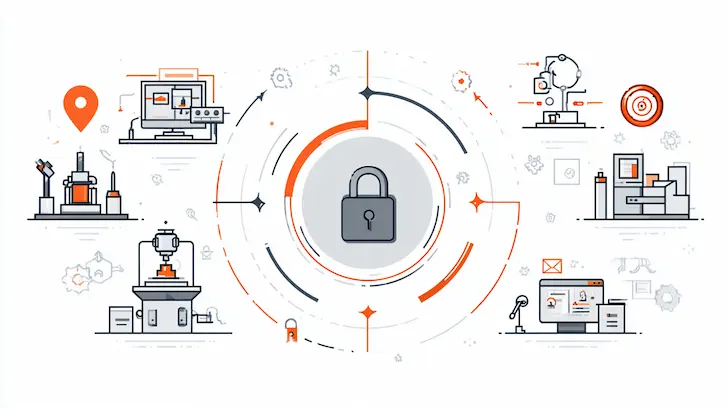
For high-profile characters or unreleased movie spoilers, we utilize "Black Box" manufacturing. This involves fragmenting the production across different facilities or compartmentalized departments. For example, a character's body might be molded in one injection molded toy manufacturer facility, while the specific "spoiler" head or accessory is produced in a separate, high-security vinyl toy manufacturer zone. Final assembly occurs at a third, biometric-controlled location. This fragmentation means that even if a bad actor in a component factory tries to leak a design, they only possess a partial, non-functional piece of the IP. This secure toy supply chain China approach makes it nearly impossible for a competitor to replicate your full high-fidelity fan collectibles before launch.
Digital and Physical Tooling Security
Molds are the physical manifestation of your IP, and their security is paramount. We use ERP production tracking system integration and GPS-tagged molds to monitor every cycle of the injection machine. If a mold is moved from its designated machine or used outside of scheduled production hours, our system triggers an instant alert. By auditing the "Shot Count" (how many times a mold has been used) against your actual purchase orders, we eliminate the possibility of unauthorized production runs. This level of anti-counterfeit manufacturing systems ensures that your licensed product manufacturing stays strictly within the agreed-upon volumes.
Protect Your Brand From Port to Shelf
Implement a multi-layered secure media brand supply chain that blocks counterfeits at the factory and the border.
Operational Confidentiality:
The Human Element
Even the best technology fails if the human element is not secured. We implement rigorous licensed merchandise security audits to manage factory staff and visitors.
Employee-Level Training and "No-Phone" Zones
Most leaks are not malicious; they are the result of an excited employee taking a photo on their smartphone. We eliminate this risk by enforcing strict "No-Phone" zones in all assembly and R&D areas. Factory staff undergo ethical toy manufacturing China training that includes specific modules on IP ethics and the legal consequences of leaks. For unreleased franchise merchandise, we implement biometric access and random staff searches. By fostering a culture of confidential licensed product manufacturing, we turn our workforce into the first line of defense for your brand.
Secure Prototype and Sample Management
Prototypes are often more valuable to counterfeiters than final products. We manage every "Golden Sample" and rejected part with AQL inspection in toy manufacturing precision. All rejected components or early-stage 3D prints are destroyed in industrial shredders on-site, with a video-recorded franchise compliance audit provided to the brand owner. This "Cradle-to-Grave" security for physical assets is what separates a standard factory from a secure toy supply chain China partner like Unstoyppable.
IP Protection in China FAQ
Do I need a Chinese trademark if I only manufacture there but sell in the US?
Yes. Even if you do not sell locally, you must have a trademark to protect IP manufacturing China. Without a Chinese registration, a "trademark squatter" could register your brand and legally seize your exports at the port for "infringing" on their local rights.
How long does it take to register IP with Chinese Customs (GACC)?
Once your CNIPA trademark registration or patent is granted, the China customs IP recordal process typically takes 30 to 45 days. This registration is valid for 10 years and can be renewed.
What is the difference between a Western NDA and a China NNN?
A standard Western NDA only covers "disclosure." A China NNN agreement (Non-Disclosure, Non-Use, Non-Circumvention) specifically prevents the factory from using your IP for their own profit or circumventing you to sell directly to your customers. It is designed for enforcement in Chinese courts.
What are the penalties for IP infringement in China in 2026?
Under current first-to-file China IP law, punitive damages can reach five times the actual loss. Furthermore, serious trade secret theft is a criminal offense punishable by 3 to 10 years in prison.