Decoding the 2026 Landed Cost:
Why Unit Price is a Vanity Metric
In the competitive theater of global retail, the "Factory Gate Price" is merely the starting line, not the finish. For procurement officers and brand owners navigating the complexities of 2026, focusing solely on the per-unit manufacturing cost is a reductive strategy that often masks significant financial leaks. To maintain healthy margins, it is essential to master how to reduce landed cost in manufacturing by analyzing the total journey of a product from a Chinese assembly line to a domestic warehouse. At Unstoyppable, we operate as a strategic consultancy, helping you look beyond the invoice to see the "Big Picture." In the current economic climate, a unit price that seems marginally higher at the source can actually result in a lower total cost if the product is engineered for logistics efficiency and tariff optimization. Success in 2026 is defined by the total landed cost formula, where every cent saved in the supply chain is a cent added directly to your bottom line.
The 2026 Total Landed Cost Formula:
A Boardroom Breakdown
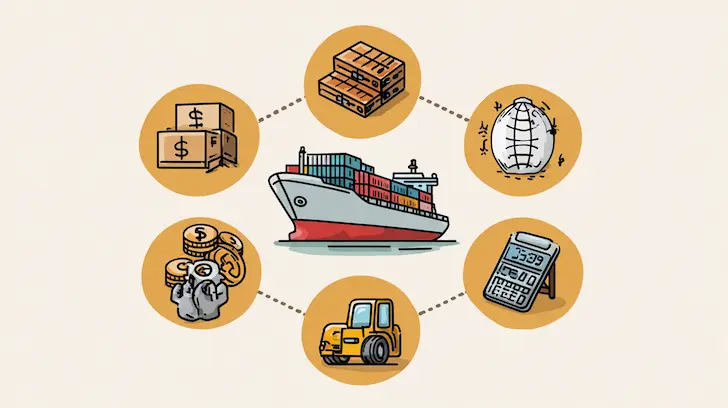
A sophisticated understanding of total landed cost formula 2026 requires a granular look at five key financial pillars. Modern procurement must account for more than just labor and materials; it must account for the geopolitical and environmental "taxes" of the modern era.

The Mathematical Reality of Importation
The updated 2026 equation is defined as:
Landed Cost = (Unit Price + Tooling) + (Freight + Surcharges) + (Customs + Tariffs) + (Insurance + Risk) + (Logistics + Carbon Tax).
By breaking down each component, Unstoyppable identifies "hidden" savings that traditional trading companies overlook. For example, while the factory gate price vs landed cost gap has historically been around 20-30%, in 2026, fluctuations in energy surcharges and carbon pricing can push that gap to 45% if not managed proactively. Our role is to compress this gap through superior engineering and logistical foresight.
The Impact of 2026 Carbon Quotas on Freight
A new variable in the 2026 cost equation is the mandatory Carbon Emission Quota. With international shipping regulations now requiring carriers to purchase carbon offsets for up to 70% of their emissions on major routes from Asia to the EU and North America, these costs are being passed directly to the brand owner. We mitigate this hidden manufacturing costs China factor by utilizing newer, more fuel-efficient "Green Steamship" lines and optimizing packaging density. Reducing the volume of your shipment is the most direct way to lower your carbon tax liability, turning environmental compliance into a financial win.
Tariff Engineering and HS Code Precision
One of the most effective methods for import duty optimization for toys is "Tariff Engineering"—the process of designing a product specifically to qualify for a lower duty classification under the Harmonized System (HS) codes.
Strategic Product Classification
The difference between a 12% duty and a 0% duty often comes down to a single design feature. For instance, a character figure classified as a "Festive Item" or a "Collector's Model" may attract entirely different tariff rates than a standard "Plastic Toy." Our technical team reviews your product designs during the oem licensed product manufacturing phase to ensure the technical character specs align with the most favorable HS code descriptions. This precision in import duty optimization for toys ensures that you are not paying a penny more in tariffs than the law requires, effectively protecting your domestic retail price point.

The Risk of Misclassification
Accurate classification is also a risk management strategy. In 2026, customs authorities have increased their use of AI-driven auditing to spot "duty evasion." By providing a rigorous, evidence-based HS code recommendation for every product we manufacture, we ensure your shipments pass through customs without the "hidden cost" of inspections, fines, or delayed market entry. Transparency is the most cost-effective path to the retail shelf.
Is Your Current Cost Model 2026-Ready?
Don't let hidden surcharges erode your 2026 margins. Work with the experts in total landed cost formula optimization.
Amortizing Tooling & Prototyping:
Long-Term Margin Defense
Initial capital expenditures (CAPEX), such as mold development & injection tooling, are often viewed as a barrier to entry. However, strategic amortization can significantly lower your per-unit landed cost over the life of a license.

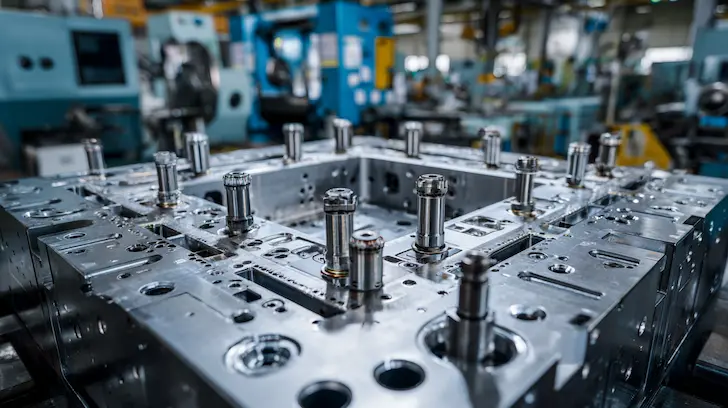
Tooling Durability and the "Zero-Maintenance" Advantage
A "cheap" mold is a significant source of hidden manufacturing costs China. Molds that degrade quickly lead to increased "scrap rates" and frequent downtime for repairs, which invisibly inflates your landed cost. At Unstoyppable, we use high-grade S136 hardened steel for our mold development & injection tooling, ensuring the tool remains pristine for up to 500,000 cycles. By investing in higher-quality tooling at the start, the cost per unit actually decreases over time as the scrap rate remains near zero and production speed remains high. This is the essence of how to reduce landed cost in manufacturing: invest in quality early to reap the dividends of efficiency later.
The Hidden Cost of Risk:
Insurance and Compliance
The final, and perhaps most overlooked, component of how to reduce landed cost in manufacturing is the cost of "Non-Compliance."
Risk Mitigation as a Cost-Saving Tool
A single product recall or a shipment seized due to a lack of FAMA compliance can double your landed cost overnight. We eliminate this risk by ensuring every factory in our network is pre-audited. The cost of comprehensive third-party toy lab testing and ethical audits is a fraction of the cost of a failed launch. In 2026, "Compliance is Insurance." By delivering a product that is "First-Time Right," we remove the potential for the most expensive hidden manufacturing costs China: the costs associated with failure, legal liability, and brand damage.

Optimizing Cargo Insurance
Finally, we assist our clients in securing "All-Risk" cargo insurance that reflects the true landed value of the goods, not just the factory price. In the event of a maritime delay or loss, having insurance that covers your anticipated retail margin and import duties ensures that your business remains Unstoyppable, even in the face of logistical disruption. We provide the peace of mind that comes from knowing every variable in the total landed cost formula 2026 is accounted for and optimized for your success.
The Procurement Insight: Saving $0.10 at the factory but losing $0.50 at the port due to poor packaging or tariff misclassification is a failure of strategy. At Unstoyppable, we ensure your factory gate price vs landed cost ratio is the most efficient in the industry. Total cost transparency is the ultimate margin protector.
Logistics Tetris:
Shrinking Your Footprint to Expand Your Margins
In the physical reality of 2026 global trade, the most expensive thing you can ship is air. As a high-volume licensed merchandise manufacturer, we have seen countless brands erode their margins by failing to account for the "Logistics Tetris" required for efficient international transport. Shipping from China to US/EU in 2026 is no longer just about finding a vessel; it is about volumetric engineering. Every cubic centimeter of unused space in a container is a direct hit to your landed cost. At Unstoyppable, we treat packaging as a strategic lever for freight cost reduction strategies 2026. By optimizing your product's footprint during the design phase, we help you fit more units into every shipment, effectively diluting your transport costs and giving you a significant price advantage at retail. It is a meticulous, efficiency-obsessed process that ensures your supply chain is as lean as your production line.
The "15 CBM" Rule and Container Utilization:
Maximizing Every Inch
Many brand owners mistakenly believe that Full Container Load (FCL) shipping is only for the largest corporations. However, understanding the "15 CBM" Rule is an essential "insider secret" for medium-sized license holders looking to optimize their toy manufacturing logistics.
Why Shipping "Air" in FCL is Often Cheaper than LCL
The "15 CBM" rule is a simple threshold: once your shipment exceeds 15 cubic meters, it is often more cost-effective to book a 20ft FCL container than to ship via Less than Container Load (LCL). LCL shipments are subject to high "port handling" and "deconsolidation" fees that scale with volume. By upgrading to FCL, you eliminate these per-CBM handling costs. If your total volume is 18 CBM, it is cheaper to pay for a 33 CBM (20ft) container and leave the rest as "air" than to pay the inflated LCL destination fees. Our ERP production tracking system monitors your batch volumes in real-time, allowing us to suggest order adjustments that push you into the most economical shipping bracket.
Consolidation Services for Multi-Factory Orders
If you are working with multiple specialized units within our audited factory network in China, we provide a centralized consolidation hub. Instead of shipping five separate LCL batches, we bring them to our Shenzhen or Ningbo warehouse to build a single, tightly packed FCL container. This "Master Tetris" approach reduces paperwork, streamlines customs clearance, and ensures that you are utilizing every cubic meter of the container you’ve paid for.

Vacuum Packing & Volumetric Efficiency:
Doubling Your Payload
For certain categories, particularly for a plush toy manufacturer China partner, the biggest enemy of profit is volumetric weight optimization. Plush toys are inherently "fluffy" and low-density, meaning you quickly hit the volume limit of a container long before the weight limit.

The Power of Vacuum Packaging for Plush Toys
By implementing industrial vacuum packaging for plush toys, we can reduce the volume of a single unit by up to 60% without damaging the internal fibers or the character's silhouette. This is a game-changer for 2026 freight costs. When a plush character is vacuum-sealed into a high-grade polyethylene bag, it essentially becomes a dense "brick." This allows us to double the number of units in a standard 40ft High Cube container. Once the end-user or retailer opens the bag, the toy "breathes" back to its original shape. This technique alone can lower the per-unit shipping cost by nearly 50%, making it one of the most effective freight cost reduction strategies 2026 for soft goods.
Engineering Retail-Ready Packaging for Density
Density optimization isn't just for plush. For injection molded toy manufacturer lines, we design the "inner" retail box to fit the "outer" master carton with zero internal slack. By reducing the height of a retail box by just 5mm, we can often fit an entire extra row of product into a shipping container. This is why we advocate for a retail-ready packaging manufacturer mindset during the initial prototyping stage—designing for the shelf and the ship simultaneously.
Stop Paying to Ship Empty Air
Our engineering team can optimize your packaging for maximum container density, drastically reducing your 2026 freight spend.
The Silk Road Resurgence:
Rail Freight as the "Middle Ground"
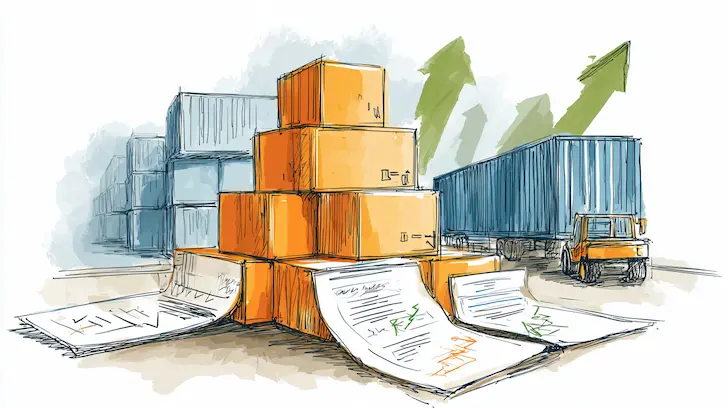
For shipping from China to US/EU 2026, sea freight is no longer the only viable option for large volumes. The "New Silk Road" rail corridor has emerged as the premier multimodal transport solution for brands that need to balance speed and cost.
15-18 Day Transit to Europe
Rail freight from China to European hubs like Hamburg, Lyon, or Warsaw currently offers a predictable 15-18 day "door-to-door" lead time. In 2026, this is significantly faster than the 35-40 day ocean transit and roughly 50% cheaper than air freight. For licensed products tied to a movie launch or a seasonal window, rail freight provides the "Just-in-Time" flexibility needed to respond to sudden demand spikes without the margin-killing cost of an emergency air shipment. It is the perfect multimodal transport solution for high-value collectibles and electronic toys that cannot sit on the water for six weeks.
Avoiding the "CIF Trap":
Maintaining Financial Control
A common mistake for new importers is selecting CIF (Cost, Insurance, and Freight) terms because they seem "easier." In reality, the "CIF Trap" is a major source of hidden manufacturing costs China.
The Kickback Scheme and Destination Surcharges
Under CIF, the factory chooses the freight forwarder. While the initial quote may look low, the factory often works with a forwarder who provides a "kickback" in exchange for the business. The forwarder then recovers this cost by hitting the buyer with massive, non-negotiable "China Import Service Fees" (CISF) and inflated "Delivery Order" fees at the destination port. You become a "captive customer" because you cannot release your goods without paying these mystery invoices.
The Superiority of FOB and EXW
At Unstoyppable, we recommend FOB (Free On Board) or EXW (Ex-Works) terms when working with a trusted partner. This gives you—the buyer—total control over the logistics chain. You choose the carrier, you see the transparent line-item costs, and you avoid the "hidden" destination surcharges of the CIF model. By taking control of your toy manufacturing logistics through a partner who operates with total transparency, you protect your margins from the port of origin to the final warehouse shelf.
Logistics Expert Tip: 2026 logistics is a game of millimeters. Whether it is using vacuum packaging for plush toys or choosing rail freight over sea, the goal is to eliminate waste. Control your logistics, or the logistics will control your profit.
Financial & Seasonal Strategies:
Shielding Your Margins from Volatility
In the landscape of 2026, supply chain excellence is measured by predictability. While many importers are reactive to market shifts, the most successful brands utilize supply chain transparency to anticipate macro-economic fluctuations before they impact the bottom line. Reducing landed cost is not just a physical endeavor of packing boxes; it is a financial discipline. At Unstoyppable, we act as a protective barrier between your margins and the volatility of global trade. By mastering currency fluctuation in manufacturing and navigating the cyclical nature of China manufacturing cost trends 2026, we transform the uncertainty of overseas production into "Predictability as a Service." Our goal is to ensure that your final landed cost remains as close as possible to your initial projection, shielding your retail price points from the "hidden drains" of currency devaluations and peak-season logistical spikes.
Managing the RMB/USD Swing:
Stability in Exchange
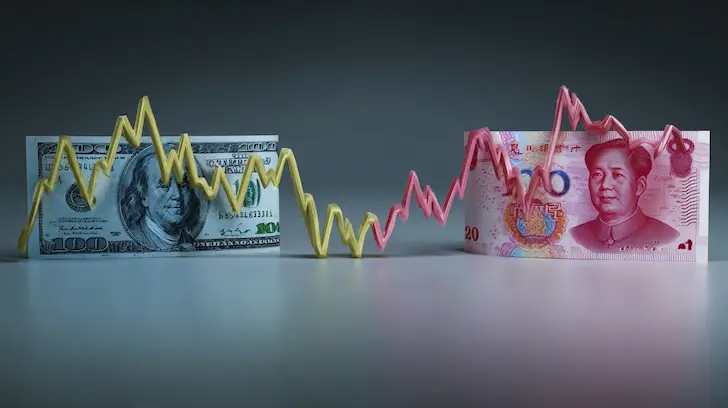
The relationship between the Chinese Yuan (RMB) and the US Dollar (USD) remains a primary variable in licensed product manufacturing. Even a 3% swing in currency value can wipe out the profit margin on a high-volume toy run if not properly managed.

Price-Adjustment Clauses and Fixed-Rate Periods
To mitigate currency fluctuation in manufacturing, we implement "Fixed-Rate Periods" for our long-term partners. During the quoting phase of a licensed merchandise production contract, we lock in a currency corridor. This means that as long as the RMB stays within a specific band (e.g., +/- 2%), your unit price remains unchanged. If the currency moves beyond that band, a pre-negotiated price-adjustment clause triggers. This transparency prevents the "emergency price hikes" that often plague importers during the middle of a production cycle. It allows you to plan your retail marketing and wholesale pricing with absolute confidence.
Forward-Thinking Fiscal Coordination
We provide our clients with deep insights into China manufacturing cost trends 2026, helping them time their payments to coincide with favorable exchange windows. By coordinating with our audited factory network in China, we can often offer "early payment discounts" that offset currency risks entirely. This level of fiscal coordination is what separates a strategic trading partner from a simple middleman.
The "Shoulder Season" Strategy:
Timing the Market
Seasonality is the most predictable yet most ignored factor in how to reduce landed cost in manufacturing. The "Pre-Christmas Rush" is a period of maximum cost and maximum risk.

Avoiding Peak Season Surcharges (PSS)
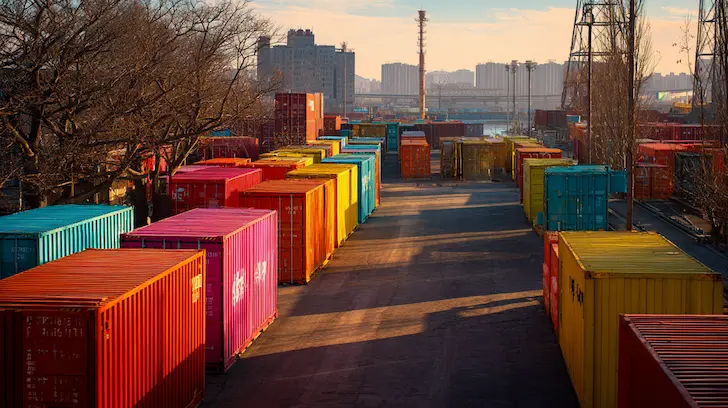
In 2026, Peak Season Surcharges can add $2,000 to $4,000 to the cost of a single 40ft container. Our toy manufacturing logistics team works with you to forecast demand 12 months in advance. By securing your production slots and shipping space during the off-peak months, you effectively "buy" a lower landed cost. It is a proactive approach that ensures your retail-ready licensed products arrive on time without the premium price tag of expedited peak-season handling.
Secure Your 2026 Production Slots Early
Lock in off-peak freight rates and shield your brand from peak season surcharges by planning your 2026 run today.
Inventory Buffers vs. Expedited Freight:
The 2026 Math
A common "hidden" landed cost is the emergency air-freight shipment required when stock levels run low. In 2026, the math overwhelmingly favors inventory buffers over last-minute logistics.
The Safety Stock Advantage
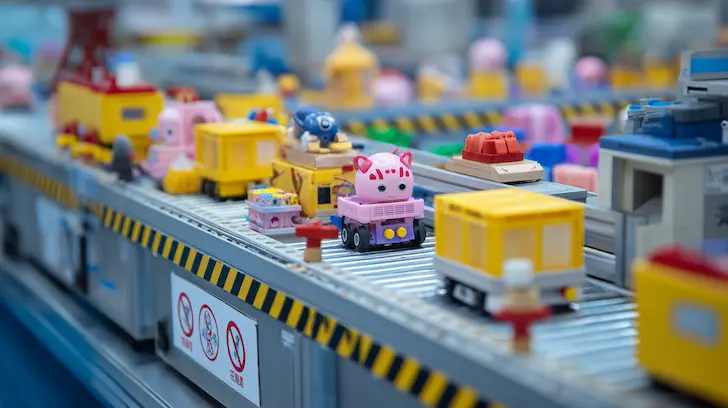
Holding 10-15% more safety stock in a domestic 3PL (Third-Party Logistics) warehouse typically costs pennies per unit in storage fees. Conversely, a single air-freight shipment from China can increase your per-unit landed cost by 400% or more. We help our clients calculate their "break-even" on inventory financing for toys, demonstrating that it is nearly always cheaper to pay for storage than to pay for speed. This conservative, protective strategy ensures you never miss a retail re-order window while keeping your total landed cost formula stable.
Vetting for "Zero-Surprise" Compliance:
Protecting the Investment
The most expensive landed cost is the one you didn't see coming: a total shipment seizure or a mandatory recall.
FAMA Compliance as a Financial Shield
Working with a FAMA compliant factory in China is more than an ethical choice; it is a financial imperative. Products manufactured in non-authorized facilities are subject to immediate seizure by customs under IP enforcement laws. By ensuring all production happens in BSCI & Sedex audited toy factory locations, we eliminate the risk of total loss. We provide "Zero-Surprise" compliance, meaning your goods pass through every checkpoint—from the factory floor to the customs & export for toys stage—without the delays and fines that derail unvetted supply chains.
Landed Cost & Financial Strategy FAQ
What is the biggest hidden cost in importing from China in 2026?
In 2026, the biggest hidden cost is the Carbon Emission Surcharge and fluctuating Peak Season Surcharges (PSS). These can add significant "unseen" fees to the total landed cost formula if they are not pre-negotiated or mitigated through off-peak shipping strategies.
How can I lower my import duties legally?
Through Tariff Engineering, we can often slightly modify a product's design or material composition so it qualifies for a more favorable HS code. For example, adjusting the "utility" or "decorative" aspects of a character figure can significantly lower the applicable duty rate.
Is air freight ever cheaper than sea freight?
Air freight is rarely cheaper than sea freight for toys, except in the "High-Density/Low-Volume" exception. For very small, high-value components (like sound chips or specialized sensors), the cost of sea-port handling fees can sometimes exceed the cost of a small air-courier shipment.
How does Unstoyppable help with "Tariff Engineering"?
We provide a technical customs & export for toys review during the prototyping stage. We analyze your product against current 2026 HS code databases to ensure that your technical character specs are optimized for the lowest possible legal tariff classification.