Toy Material Engineering:
Bridging Chemical Safety and Mechanical Performance
In the high-stakes world of entertainment merchandise, the physical substance of a product is as critical as its visual design. Toy material engineering is the invisible science that determines whether a collectible feels like a premium treasure or a generic commodity. At Unstoyppable, we recognize that "material is the message." Every polymer chosen for a project carries the weight of the brand’s reputation, affecting everything from structural durability to the precision of high-fidelity character finishing. For the 2026 market, polymer selection for toys has evolved into a multi-disciplinary challenge, requiring a balance between the molecular stability needed for complex injection molding and the rigorous non-toxic standards demanded by global regulators. Our engineering teams meticulously analyze the mechanical requirements of your IP to select resins that offer the perfect "hand-feel," weight, and longevity, ensuring that your licensed product validation China process begins with the highest quality raw materials available.
The Material Matrix:
Strategic Selection for Character Integrity
Modern character design often requires a mix of contradictory physical properties: rigid structural strength paired with soft, life-like textures. To solve this, our toy material engineering specialists utilize a "Material Matrix" approach, assigning specific polymers to different anatomical parts of a figure based on their mechanical function.

High-Impact ABS for Rigid Structures and Armor
When a design calls for sharp edges, intricate mechanical detail, or structural rigidity, high-impact ABS toy manufacturing is the definitive choice. Acrylonitrile Butadiene Styrene (ABS) provides the dimensional stability necessary for "snap-fit" assemblies and complex armor plating. Its high surface energy makes it an excellent substrate for printing film for toy materials, ensuring that fine-line graphics and metallic finishes adhere with permanent clarity. By utilizing premium-grade ABS, we ensure that the character's silhouette remains crisp and that the internal "skeleton" of the toy can withstand the stresses of global shipping and retail handling.
Flexible PVC for Organic Textures and Aesthetics
For the organic elements of a character—such as skin, flowing capes, or soft hair—we utilize flexible PVC toy production. Polyvinyl Chloride is uniquely versatile, allowing our engineers to adjust its plasticizer content to achieve a specific "squish" or flexibility. This adaptability is essential for character engineering for toys, as it allows for a seamless blend between a rigid torso and soft, posable limbs. Our 2026 PVC formulations are strictly phthalate-free, meeting all ASTM F963 material safety benchmarks while providing the vibrant color saturation that fans expect from high-end collectibles.
POM Engineering for High-Friction Articulated Joints
The most common failure in action figures is the "loose joint" syndrome. To prevent this, we integrate POM engineering for toy joints. Polyoxymethylene (POM), also known as Acetal, is a high-performance engineering thermoplastic with a low coefficient of friction and high wear resistance. We use POM for the "pins" and "balls" of articulated joints because it maintains its tension over thousands of poses. This material ensures that a character can hold a dynamic pose on a collector's shelf for years without the joints degrading. This is a hallmark of precision toy molding China, where the choice of a single internal material can elevate the entire consumer experience.
Shore Hardness Calibration:
The Technical Scale of Flexibility
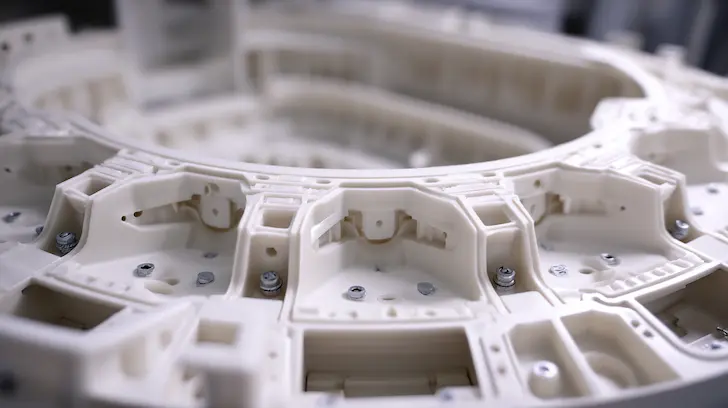
A critical component of our toy material engineering workflow is the precise calibration of Shore Hardness. This is the measure of a material's resistance to indentation, and it is the metric that defines the "feel" of the Golden Sample.
Defining Shore A vs. Shore D for Tactile Accuracy
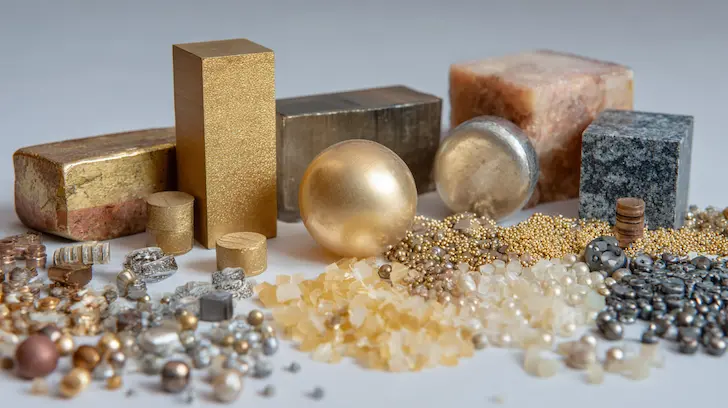
We utilize the Shore A scale for flexible components (like a rubberized grip or a soft-touch cape) and the Shore D scale for harder plastics. During the golden sample development process, our engineers specify exact durometer ratings. For example, a character’s boots might be rated at Shore A 85 for a firm but slightly pliable feel, while the head sculpt might be Shore A 60 to allow for easier assembly onto a neck peg. This level of polymer selection for toys ensures that every part of the figure performs its mechanical role while providing a tactile experience that aligns with the character's onscreen persona.
The Impact of Durometer on Safety Compliance
Shore hardness is not just about feel; it is a safety parameter. A material that is too hard in a "pointed" area (like a sword tip) may fail ASTM F963 prototype testing for sharp points. Conversely, a material that is too soft might pose a choking hazard if a small part can be easily bitten off. Our toy material engineering team calculates these risks during the DFM phase, selecting materials that balance aesthetic flexibility with the "bite-test" and "tension-test" requirements of EN71 compliant toy manufacturer standards.
ENGINEER FOR DURABILITY
The lifespan of your IP depends on the molecular integrity of the resins you choose. Partner with polymer specialists who understand the intersection of chemistry and play.
Thermal Stability:
Preventing Sink Marks and Warping
Effective toy material engineering must account for how a plastic behaves as it transitions from a molten state to a solid. Managing the "Melt Flow Index" (MFI) is the key to preventing industrial defects.
Maintaining Dimensional Stability Across Large Production Runs
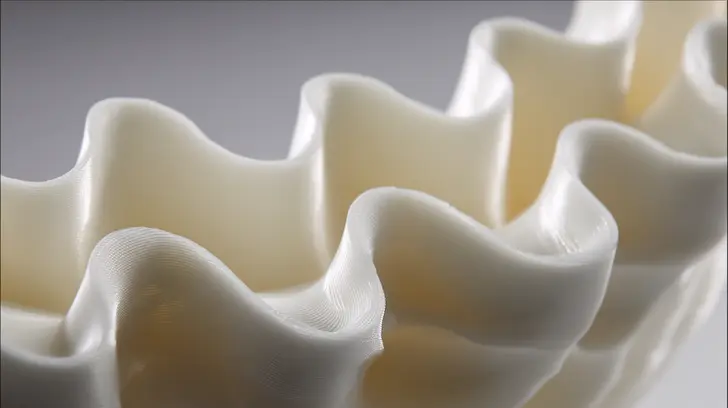
Warping occurs when internal stresses are "frozen" into the part during molding. We utilize toy mold flow analysis to select materials that have a predictable and consistent shrink rate. This is especially vital for multi-cavity injection molds, where every part must be identical. In 2026, we utilize AI-enhanced polymer monitoring to ensure that the resin's moisture content and temperature are perfectly controlled, guaranteeing that the 10,000th unit is as dimensionally accurate as the Golden Sample.
Hybrid Material Overmolding:
The Science of Bonding
One of the most premium techniques in toy material engineering is the bonding of disparate materials to create a unified, multi-textured component. This is often achieved through 2K (Two-Shot) molding or overmolding.
Bonding TPE to ABS for Premium Ergonomics
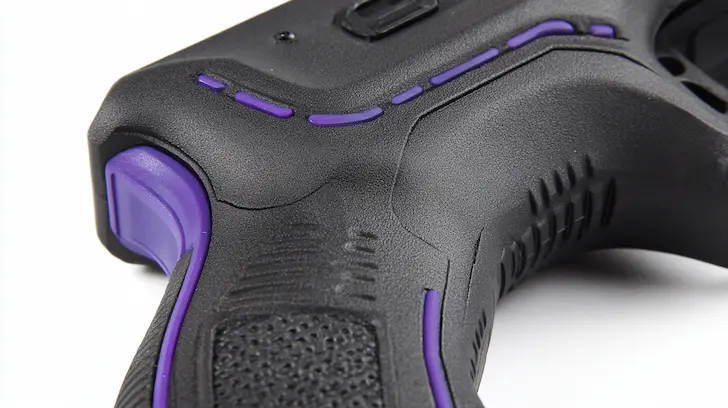
To create a character with "soft-touch" armor or ergonomic grips, we overmold a soft Thermoplastic Elastomer (TPE) onto a rigid ABS substrate. This requires a deep understanding of chemical compatibility; the two materials must form a "molecular weld" at the interface to prevent peeling. Our automated toy tooling systems are calibrated to manage the different melting points of these polymers, ensuring a clean, flash-free seam. This toy material engineering capability allows for the creation of retail-ready licensed product production that feels expensive and high-quality to the touch.
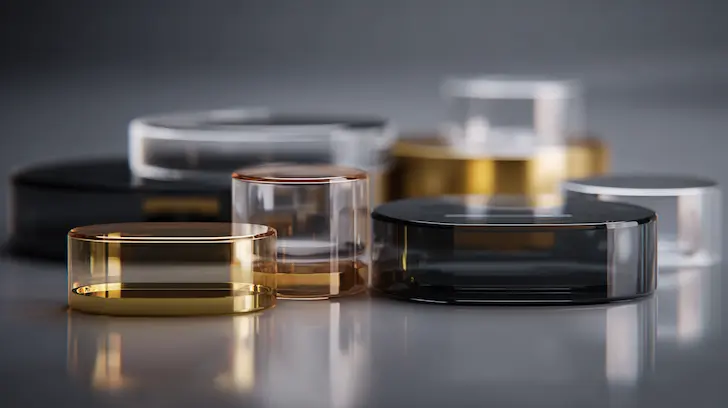
Visual Contrast and Material Depth
Hybrid molding is also used for aesthetic depth—such as overmolding a transparent "smoke" plastic over a metallic-painted internal frame. This creates a "layered" look that is impossible to achieve with paint alone. By mastering the science of material bonding, Unstoyppable helps brands push the boundaries of entertainment merchandise manufacturing, delivering products that stand out in a crowded global marketplace through superior material sophistication.
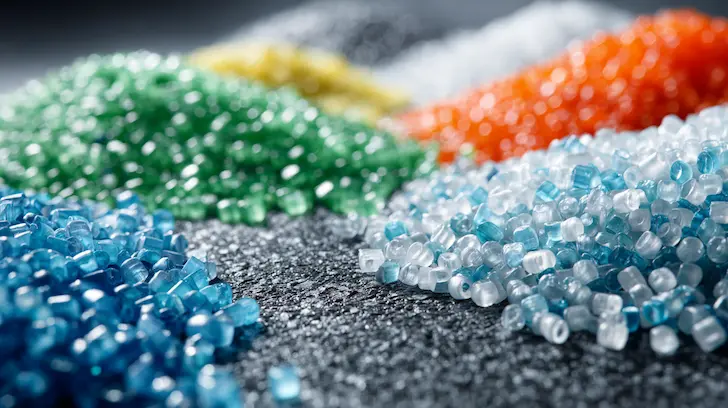
The Material Advantage: At Unstoyppable, we believe that toy material engineering is the foundation of brand trust. By meticulously selecting high-impact ABS, flexible PVC, and POM for joints, we deliver a product that is safe, durable, and visually stunning. Let us help you select the polymers that will define your character's physical legacy in 2026.
Sustainable Toy Manufacturing:
Navigating Bio-Resins and Recycled Polymers
As we advance into 2026, the toy industry is undergoing a profound transformation toward environmental stewardship. At Unstoyppable, sustainable toy manufacturing is a core engineering pillar, allowing brands to align their physical products with global ESG (Environmental, Social, and Governance) goals. The transition to eco-friendly toy engineering involves a sophisticated understanding of new-age polymers that offer a reduced carbon footprint without compromising the high-fidelity detail required for licensed IP. By integrating sustainable toy materials into our audited factory network, we provide a pathway for media franchises and retail giants to participate in the circular economy toy production model. This visionary approach ensures that the toys of tomorrow are as kind to the planet as they are engaging for the fans.
PCR vs. PIR Plastics:
Mastering the Recycled Stream
The foundation of circular economy toy production lies in the effective reuse of existing polymers. We distinguish between Post-Consumer Recycled (PCR) and Post-Industrial Recycled (PIR) resins to provide the most stable material stream for your project.
Maintaining Color Consistency in Recycled Batches
One of the primary challenges in recycled ocean plastic manufacturing is achieving the vibrant, "on-brand" colors required by style guides. PCR plastics often come with inherent tints from their previous lives. Our toy material engineering team utilizes advanced compounding techniques to "neutralize" these base colors, allowing for 100% accurate Pantone matching even in high-recycled-content resins. By utilizing PIR—which is high-quality scrap redirected from the manufacturing process—we maintain a nearly virgin-level purity while significantly reducing waste. This dual-stream approach ensures your character's aesthetics remain flawless while supporting sustainable toy materials initiatives.
Structural Integrity of Ocean-Bound Polymers
Recycled ocean plastic manufacturing is a powerful storytelling tool for brands. We engineer these specific resins to ensure they meet the mechanical stress requirements of modern play. By reinforcing recycled polymers with eco-friendly additives, we ensure that a character made from reclaimed fishing nets or coastal waste has the same impact resistance as virgin ABS. This is the essence of eco-friendly toy engineering: delivering a product that carries a powerful environmental message without sacrificing durability.
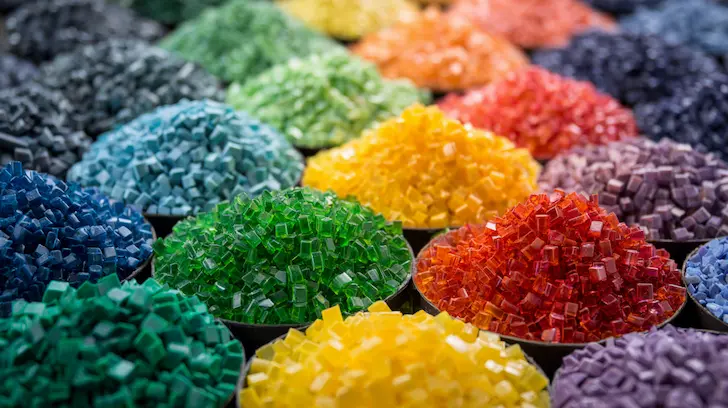
Bio-Acetate and Plant-Based Resins:
The Organic Future
Beyond recycling, the 2026 landscape is defined by bio-based plastic toys derived from renewable sources such as corn, sugarcane, or forestry byproducts.
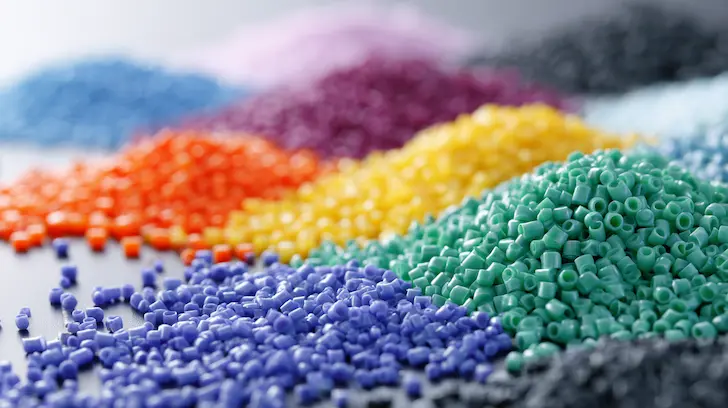
Engineering for Narrower Molding Windows
Bio-resins like Bio-Acetate or PLA-blends are highly sophisticated materials that require a "soft touch" during the injection process. These materials have a narrower thermal window and higher moisture sensitivity than traditional petroleum-based plastics. Our toy material engineering protocols include specialized drying stages and low-shear screw configurations to prevent material degradation. By mastering these bio-based plastic toys, we allow IP holders to move away from fossil-fuel dependence while maintaining the crystal-clear transparency or high-gloss finish traditionally associated with standard plastics.
Balancing Degradability and the "Right to Repair"
The 2026 market demands a balance between end-of-life degradability and long-term durability. For high-end collectibles, longevity is a sustainable trait in itself—preventing products from entering the waste stream. For "blind box" components or promotional items, we implement biodegradable resins that break down in industrial composting environments. This nuanced application of sustainable toy materials ensures that the lifecycle of the product matches its intended use, a hallmark of eco-friendly toy engineering.
Build a Greener Future
Your brand's legacy should be sustainable. Discover our 2026 sustainable material catalog and lead the transition to eco-friendly licensed products.
Tooling Adjustments for Green Materials
Transitioning to bio-based plastic toys is not a "drop-in" solution; it requires advanced toy tooling R&D to account for unique material behaviors.
Recalibrating for Different Shrinkage Rates
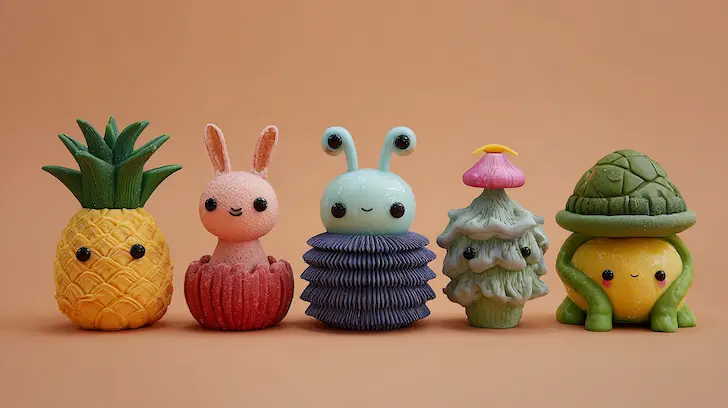
Sustainable resins often exhibit different shrinkage and cooling characteristics than virgin ABS or PVC. Our toy material engineering department works closely with the tooling shop to adjust mold dimensions by fractions of a millimeter. This ensures that when your character is cast in a 2026 bio-polymer, it fits perfectly within its retail-ready packaging and maintains all toy articulation engineering tolerances. By investing in this specialized advanced toy tooling R&D, we ensure that "going green" never means "losing precision."
Chemical Integrity:
Phthalate-Free Standards and High-Definition Finishes
In the premium licensed toy sector, the intersection of safety and aesthetics is where brand trust is truly forged. For 2026, toy material engineering must go beyond structural strength to encompass molecular purity. At Unstoyppable, our commitment to phthalate-free toy materials is a foundational promise, ensuring that every character produced is safe for global distribution and domestic play. We utilize advanced toy chemical compliance testing to monitor our supply chain at every stage, from raw pellet procurement to final surface decoration. By bridging the gap between non-toxic chemistry and high-fidelity character finishing, we provide IP holders with the confidence that their products meet the world’s most stringent safety mandates, including ASTM F963 material safety and EN71 standards. Our meticulous approach ensures that a toy is as healthy for the consumer as it is beautiful to the eye.
The Zero-Toxin Mandate:
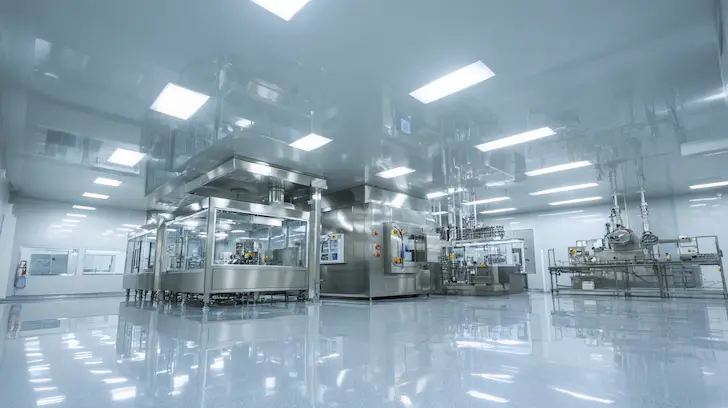
Our 2026 "Clean Room" Compounding
Guaranteeing a toxin-free product requires more than just high-quality resin; it requires a controlled manufacturing environment that prevents environmental cross-contamination. Our toy chemical compliance testing protocols are integrated into the very air of our facilities.
Preventing Cross-Contamination of Heavy Metals and Lead
We utilize a "Clean Room" compounding process for all phthalate-free toy materials. This specialized environment ensures that no airborne particles or residues from heavy metals, lead, or cadmium can infiltrate the production cycle. By maintaining a segregated supply chain for our licensed partners, we guarantee that the material purity of the first unit is identical to the millionth. This proactive custom vinyl toy finishing foundation is essential for brands that prioritize ethical toy manufacturing China and absolute consumer safety.
Eliminating Prohibited Phthalates at the Source
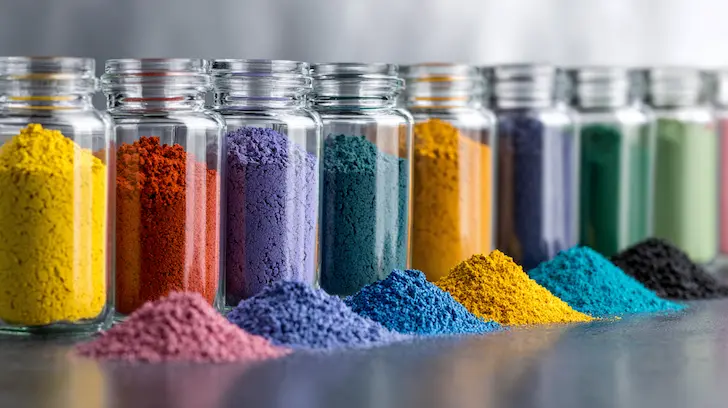
Phthalates, often used to soften PVC, are strictly controlled in the 2026 regulatory landscape. We utilize only high-grade, bio-compatible plasticizers that provide the necessary flexibility for flexible PVC toy production without the use of restricted ortho-phthalates. Each batch of raw material is accompanied by a Certificate of Analysis (COA) and verified via third-party toy lab testing. This ensures that our licensed merchandise manufacturer operations remain fully CPSIA compliance manufacturing ready at all times.
Printing Film Adhesion Science:
Fusing Art to Chemistry
A high-definition finish is only as good as its bond to the plastic substrate. Our toy material engineering team focuses on the molecular surface energy of parts to ensure that printing film for toy materials becomes a permanent part of the toy.
Engineering Surface Energy for Permanent Bonding
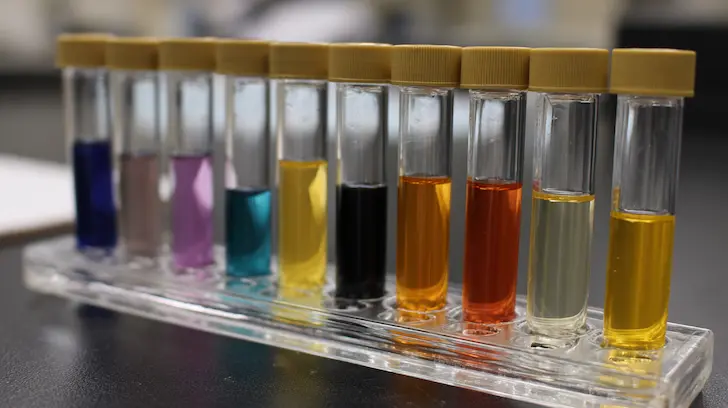
To ensure that In-Mold Labeling (IML) or printing film for toy materials adheres without peeling or bubbling, we calibrate the dyne levels of the plastic surface. By treating the substrate with corona or plasma activation during the automated toy tooling process, we increase the surface tension, allowing the ink and film to "fuse" with the polymer. This scientific approach to custom vinyl toy finishing ensures that character graphics, logos, and intricate textures remain sharp and inseparable from the figure, even under the stress of vigorous play.
High-Fidelity Finishes with Micro-Precision
Utilizing high-fidelity character finishing, we can apply multi-layered graphics that mimic the look of metallic armor, weathered leather, or glowing energy effects. Because we engineer the material to be receptive to these films, we achieve a level of detail that traditional spray painting cannot match. This fusion of printing film for toy materials and polymer science allows IP holders to realize their most complex digital designs in physical form with zero loss of detail.
Guarantee Safety Without Sacrificing Style
Your IP deserves the safest materials and the sharpest finishes. Learn about our 2026 non-toxic sourcing protocols and our high-definition finish compatibility.
Review Our Safety Benchmarks | Explore Phthalate-Free Sourcing
Chemical Resistance:
Durability Against the Elements
A toy’s finish must survive more than just a visual inspection; it must withstand the chemical realities of the human touch. We conduct rigorous testing on all high-fidelity character finishing to ensure longevity.
UV Stability and Fade Resistance
Sunlight is a natural enemy of plastic and pigment. We incorporate UV-stabilizers into our phthalate-free toy materials and surface films to prevent yellowing or fading. By engineering the chemical resistance of our finishes, we provide a product that retains its "shelf-fresh" appearance, even in high-UV retail environments or sun-drenched collector rooms. This is ASTM F963 material safety applied to aesthetic longevity.
Traceability at the Molecular Level:
The Anti-Counterfeit Shield
To protect IP holders in a global market, we offer 2026-level security through "chemical fingerprints" integrated directly into the resin.
Integrating Molecular Tracers for Authenticity
We can embed microscopic molecular tracers into your high-precision toy molds during the injection process. These tracers are unique to your production run and act as an invisible "DNA" for your product. This anti-counterfeit manufacturing system allows you to verify the authenticity of any unit in the field with a simple handheld scanner. By linking toy material engineering with brand security, we ensure that only genuine, phthalate-free toy materials carrying your license are present in the global supply chain, protecting both your revenue and your brand reputation.

Chemical Compliance & Materials FAQ
What are the safest materials for toddler toys?
The safest materials for toddlers are medical-grade silicone, food-safe Polypropylene (PP), and phthalate-free toy materials like specialized TPE. These resins are naturally BPA-free and do not require harmful plasticizers, ensuring they pass all ASTM F963 material safety tests for "mouthable" products.
How do recycled plastics affect toy color vibrancy?
While raw recycled resin can have a gray or green tint, our toy material engineering uses optical brighteners and high-pigment masterbatches to achieve 100% color accuracy. We ensure that sustainable toy materials meet the exact Pantone specifications of your brand style guide without any loss of vibrancy.
Why is POM used instead of ABS for articulated joints?
POM (Polyoxymethylene) is used for its superior wear resistance and low-friction properties. Unlike ABS, which can grind down and become loose, POM maintains constant tension. This high-precision toy molds strategy ensures that action figures can hold their poses indefinitely without the joints losing their "bite."
How does Unstoyppable verify materials are BPA and Phthalate-free?
We utilize third-party toy lab testing (SGS or Intertek) on every batch of raw resin. Our toy chemical compliance testing includes ICP-MS (Inductively Coupled Plasma Mass Spectrometry) to detect heavy metals and GC-MS (Gas Chromatography-Mass Spectrometry) to verify the absence of phthalates and BPA, ensuring ASTM F963 material safety.