Engineering for Durability:
Identifying and Avoiding Physical Production Failures
In the competitive landscape of the global toy market, the physical integrity of a product is the most visible indicator of brand quality. Common failures in toy production often stem from a fundamental disconnect between aesthetic design and industrial engineering. When a toy fails structurally, it represents more than just a damaged unit; it signifies a breakdown in the toy material engineering process that can lead to costly recalls and irreparable damage to a brand's reputation. At Unstoyppable, we approach manufacturing through the lens of failure prevention. By analyzing the "Science of Failure," we identify potential toy structural defects during the pre-production phase, ensuring that every injection molded toy manufacturer in our network adheres to the highest mechanical standards. Engineering for durability is a proactive discipline that transforms a fragile concept into a resilient, retail-ready reality.
The "Brittle Plastic" Trap:
Solving the Integrity Crisis
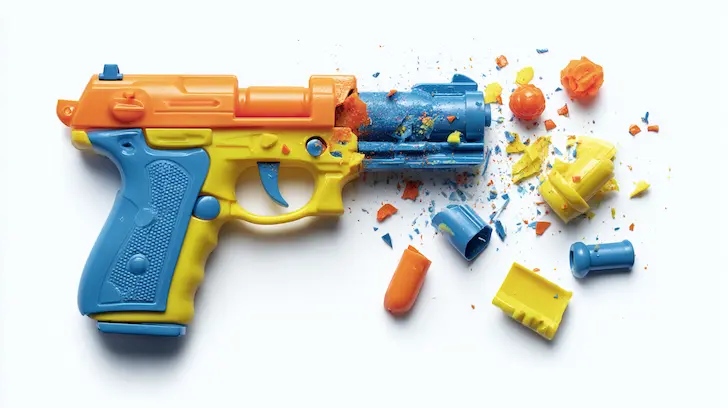
One of the most frequent common failures in toy production is the emergence of brittle plastic in toy manufacturing. This defect often remains hidden until the product reaches the consumer, where it shatters under standard play conditions, creating dangerous sharp edges.
Improper Resin Drying and Molecular Degradation
Many high-performance resins, such as Nylon or ABS, are hygroscopic, meaning they absorb moisture from the air. If an injection molded toy manufacturer fails to utilize industrial-grade desiccant dryers, the moisture turns to steam during the heating process. This causes a chemical reaction called hydrolysis, which breaks the polymer chains and results in a structurally compromised, brittle part. We prevent this by enforcing strict material handling protocols, ensuring all resins are dried to the exact parts-per-million (PPM) moisture content specified in our toy material engineering Master File.
The Risks of Excessive "Regrind" Usage
While recycling excess plastic (regrind) is an important part of sustainable manufacturing, the over-use of recycled material is a leading cause of toy structural defects. Each time plastic is melted, its molecular bonds weaken. A high percentage of regrind leads to a significant drop in impact resistance. We maintain 100% transparency in our material ratios, ensuring that the use of regrind is strictly limited and monitored. This ensures that the structural "Toughness" of the toy remains consistent across the entire production run, maintaining the safety standards expected of a professional injection molded toy manufacturer.
Sink Marks and Warping:
Correcting Thermodynamic Deformities
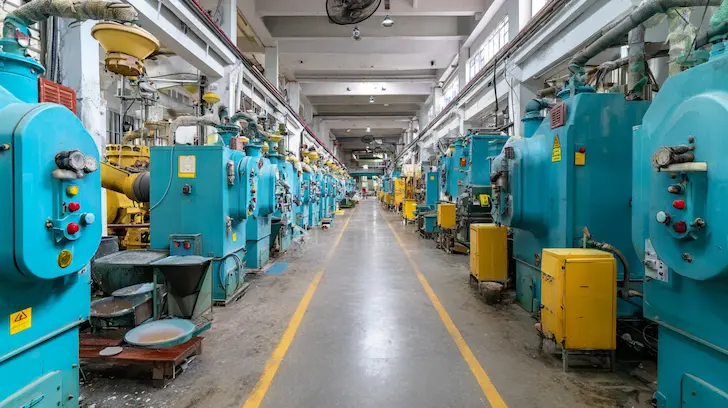
Cosmetic defects like sink marks and warping are often symptoms of deeper issues within the automated toy manufacturing China environment, specifically regarding heat management and cycle times.
Optimizing Cooling Cycles for Geometry Stability
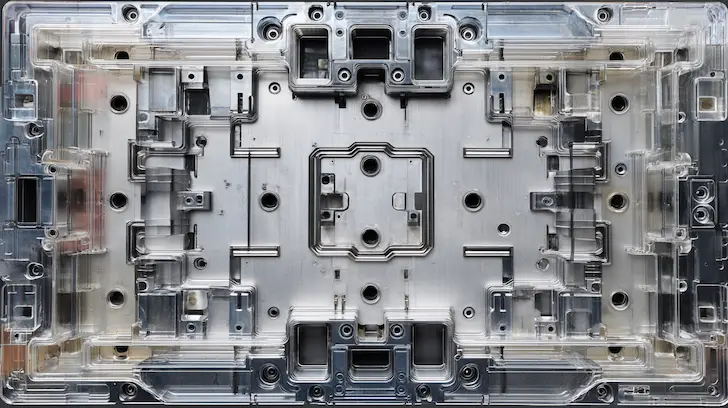
Warping occurs when different areas of a plastic part cool at different rates, causing the part to "pull" and bend out of its intended shape. This is particularly common in common failures in toy production involving large, flat surfaces or thin-walled components. Our engineers prevent this by designing sophisticated cooling channels within the mold development and injection tooling. By ensuring a uniform thermal exit strategy, we guarantee that the part retains its 3D geometry as it ejects from the machine, resulting in a perfect fit during final assembly.
Managing Wall Thickness to Prevent Sink Marks
Sink marks—unsightly depressions on the surface of a toy—are caused by localized shrinkage in thick sections of plastic. These are often the result of mold design errors where the transition between thick and thin walls is too abrupt. Through rigorous toy material engineering, we implement "coring out" techniques to maintain uniform wall thickness. This not only eliminates sink marks but also reduces material waste and speeds up the production cycle in automated toy manufacturing China facilities, creating a win-win for both quality and cost-efficiency.
Don't Let Structural Flaws Break Your Brand
A single engineering oversight can lead to a global recall. Request a professional technical review of your toy's engineering blueprints today to ensure a flawless launch.
Weld Line Weakness:
Eliminating Invisible Fracture Points
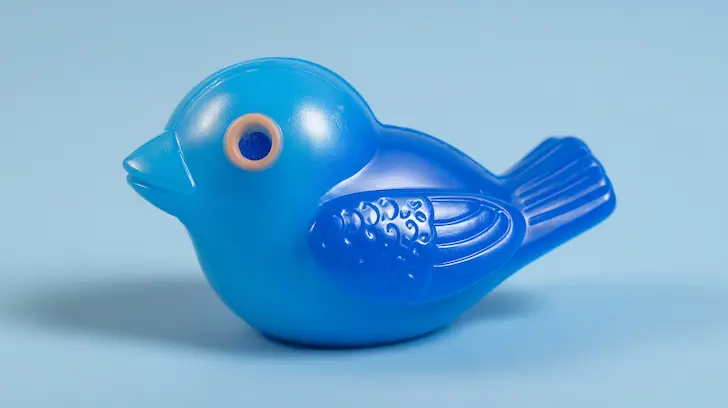
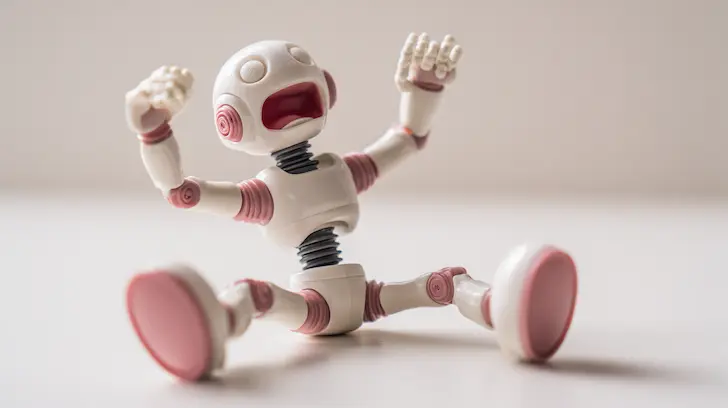
Weld lines are the areas where two flows of molten plastic meet inside the mold. If not managed correctly, these lines become the "Achilles' Heel" of the product, leading to some of the most dangerous toy structural defects.
Structural Reinforcement Through Geometry
Where weld lines are unavoidable, we integrate structural reinforcements such as internal ribs or gussets. By reinforcing the internal architecture of the part, we ensure that the toy passes the high-energy "Drop Tests" required by international safety standards. This attention to the "Invisible" details of the injection molded toy manufacturer process is what separates Unstoyppable from standard suppliers.
Stress Whitening:
Solving Durometer and Flex Issues
Stress whitening occurs when plastic is bent or stressed beyond its elastic limit, causing the polymer chains to reorganize and turn white. This is a classic example of common failures in toy production for articulated figures or toys with "living hinges."
Choosing the Right Durometer for High-Flex Areas
Through advanced toy material engineering, we identify high-stress pivot points and hinges early in the design phase. We often recommend a "Dual-Material" approach, using a rigid plastic for the body and a high-flexibility Polypropylene (PP) or Thermoplastic Elastomer (TPE) for the hinges. This prevents the unsightly white marks and eventual snapping of the plastic. By selecting the correct durometer (hardness) for each specific function, we ensure the toy remains aesthetically perfect even after thousands of flex cycles.
Process Control in Automated Toy Manufacturing China
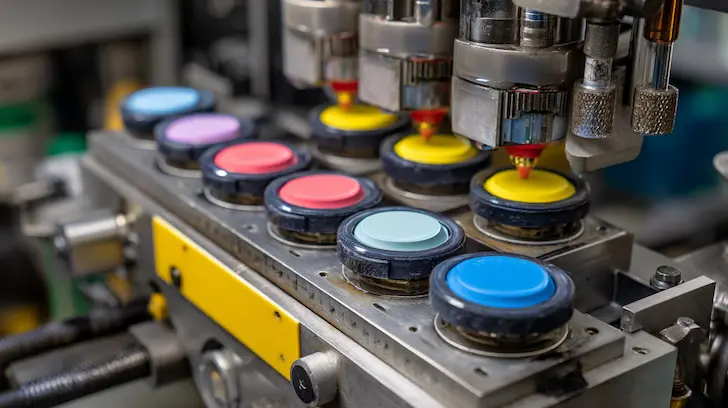
Beyond material choice, the speed and pressure of the injection cycle also influence stress whitening. In our automated toy manufacturing China operations, we utilize multi-stage injection profiles to minimize the "Internal Stress" built into the part. By allowing the molecules to relax as they fill the mold, we create a more stable product that is naturally resistant to whitening and stress-cracking. This technical oversight ensures your licensed merchandise production remains premium in quality and durability.
Expert Conclusion: Physical defects are not inevitable; they are the result of unmanaged variables. By mastering the toy material engineering and mold development and injection tooling phases, Unstoyppable ensures that your product is built to last. We solve the engineering problems before they reach the factory floor.
Protecting the Likeness:
Preventing Aesthetic Deviations and IP Infidelity
In the world of high-stakes licensing, a character's likeness is its most valuable asset. The "Off-Model" crisis—where a physical product fails to capture the essence of the digital or animated original—is one of the most damaging common failures in toy production. For a passionate fan base, a superhero with the wrong eye shape or a cartoon character with a slightly off-hue skin tone is immediately recognizable as an inferior product. This lack of brand integrity in manufacturing doesn't just result in poor sales; it can lead to the termination of licensing agreements. At Unstoyppable, we view character product manufacturing as an exercise in high-fidelity replication. We implement licensed toy quality control measures that treat every millimeter of a character’s face as a critical dimension, ensuring that the transition from 2D art to 3D reality is executed with absolute fidelity to the source material.
The "Dead Eye" Syndrome:
Mastering Pad Printing Precision
The eyes are the "Soul" of the character. One of the most frequent aesthetic pad printing defects is poor registration, which leads to what industry insiders call "Dead Eye" syndrome—where the pupils are misaligned, making the character look vacant or "off-model."
Registration Accuracy and Multi-Hit Printing
In character product manufacturing, eyes often require five or more separate "hits" of color (the white, the iris, the pupil, the catch-light, and the eyeliner). If the jig holding the toy moves by even 0.1mm between these hits, the entire expression is ruined. We utilize high-precision pad printing for toys equipment with micro-adjustment capabilities. By using custom-machined nesting fixtures that lock the part into a fixed coordinate system, we ensure that every layer of ink is perfectly registered. This precision prevents off-model toy production and ensures the character’s personality shines through in every unit.
Ink Opacity and Sharp Silhouettes
Aesthetic failures also occur when light colors are printed over dark plastics, resulting in "muddy" or translucent features. Our licensed toy quality control protocols require high-pigment-load inks and, when necessary, a "double-hit" of white base to ensure vibrancy. By maintaining crisp silhouettes and opaque colors, we deliver a professional finish that satisfies the strict standards of entertainment merchandise manufacturing brands.
Color Drift:
Maintaining Pantone Consistency at Scale
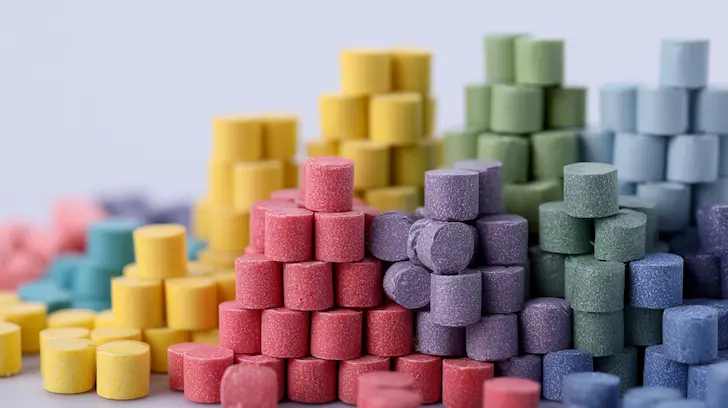
A brand is defined by its colors. Color drift—the subtle shifting of hues between production batches—is a silent killer of retail visual impact. When products from different batches are displayed side-by-side on a shelf, any variation in color becomes glaringly obvious.
Scientific Pantone Matching and Light Box Verification
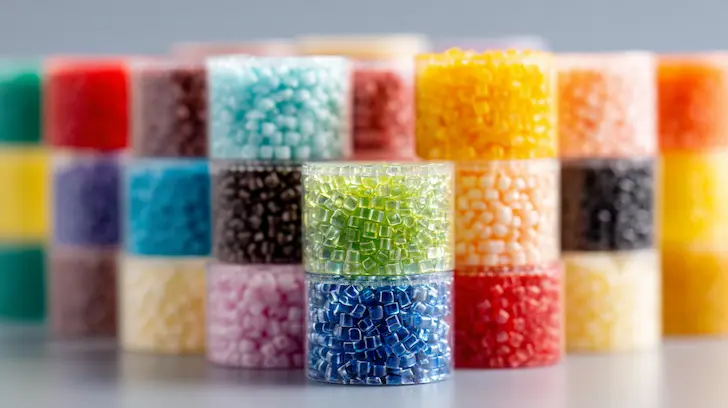
To prevent off-model toy production caused by color variance, we move beyond subjective visual checks. We utilize spectrophotometers to measure color at a molecular level, ensuring it stays within a strict "Delta E" tolerance from the approved Pantone reference. Our character product manufacturing process involves verifying samples under standardized lighting conditions (D65 light boxes) to account for metamerism—the phenomenon where colors look different under different light sources. This rigorous Pantone matching ensures that whether a fan buys a toy in London or Los Angeles, the colors are identical.
Resin Pigment Stability
Consistency starts with the raw material. We avoid the common failures in toy production associated with manual pigment mixing. Instead, we use pre-colored "Compounded Resins" where the color is integrated at the pellet level by the material supplier. This ensures that the color is consistent through the entire thickness of the plastic, preventing the "faded" look often seen in lower-quality licensed merchandise manufacturer outputs.
Ensure Your Characters Look Perfect Every Single Time
Don't let "off-model" defects ruin your brand's reputation. Partner with Unstoyppable to maintain 100% IP fidelity through our industry-leading quality control systems.
Explore Character Production Excellence | See the Asset Translation Process
Soft Detail Loss:
The Consequence of Tooling Degradation
A character’s "DNA" is found in the fine details—the texture of a cape, the etchings on a shield, or the subtle wrinkles around the eyes. Soft detail loss occurs when a manufacturer tries to squeeze too many units out of a mold or uses low-grade steel.
Hardened Steel vs. Soft Steel Molds
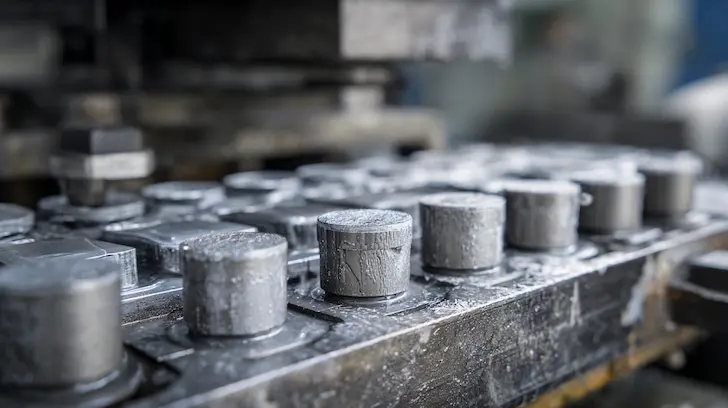
In character engineering for toys, we define the microscopic textures that give a character depth. To preserve these through a long production run, we utilize hardened S136 stainless steel for our mold cavities. Unlike softer steels that "wash out" after 10,000 cycles, our high-grade tooling maintains sharp edges for hundreds of thousands of shots. This prevents off-model toy production by ensuring that the 100,000th unit has the same crisp detail as the first "Golden Sample."
Mold Maintenance and Cleaning Protocols
Even the best steel can suffer from "mold fouling"—the buildup of gases and residues that fill in fine textures. Our licensed toy quality control includes mandatory mold-cleaning intervals and ultrasonic cleaning of the inserts. This proactive maintenance ensures that the character asset translation remains high-definition throughout the entire licensed merchandise production lifecycle.
Secondary Process Failure:
Durability of the Aesthetic
The "Off-Model" crisis can also happen *after* the product leaves the factory if secondary finishes like flocking, electroplating, or "soft-touch" coatings begin to peel or flake off.
Surface Preparation and Adhesion Testing
Many common failures in toy production are caused by poor surface preparation before painting or coating. Residual mold release agents (oils used to help the part pop out of the mold) can prevent paint from sticking. We utilize plasma treatment or aqueous cleaning to ensure a chemically clean surface. In our character product manufacturing labs, we perform "Cross-Hatch Adhesion Tests" and "Tape Tests" to ensure that the character’s finish is permanent and will withstand years of handling by fans and collectors.
Advanced Coating Stability
Whether it is a metallic vacuum metalizing finish or a velvety flocking, we ensure that the binders and primers are compatible with the base resin. Through licensed toy quality control, we verify that these finishes do not react with environmental moisture or skin oils. By perfecting the chemistry of the finish, we protect the brand integrity in manufacturing and ensure the character remains in "mint condition" long after it has been unboxed.
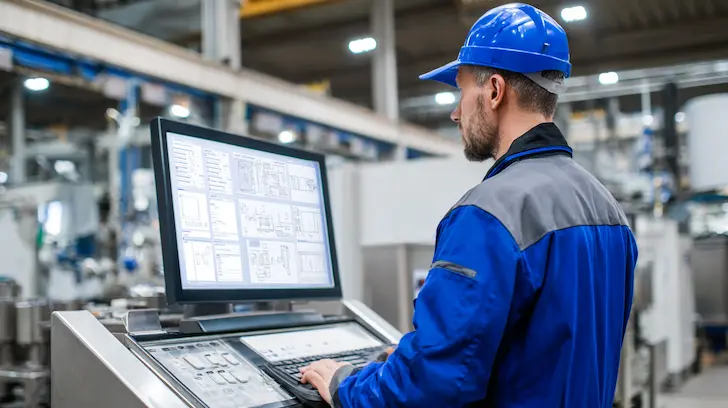
Brand Steward's Note: In the world of collectibles and licensed toys, the likeness is the product. By mastering pad printing for toys, Pantone matching, and high-fidelity tooling, we eliminate off-model toy production at the source. We don't just manufacture toys; we protect icons.
Navigating the Compliance Minefield:
Avoiding Customs Seizures and Safety Recalls
The transition from the factory floor to the global marketplace is governed by a complex web of legal and safety mandates. Licensed merchandise production failures in the realm of compliance are often the most devastating, as they do not merely result in a defective product, but in the total blockade of inventory at international borders. A single missing document or a minor chemical variance can lead to toy safety compliance failures that trigger mandatory recalls, heavy fines, and the destruction of thousands of units of inventory. At Unstoyppable, we recognize that logistical success is built on "Bulletproof Documentation." We ensure that every shipment is backed by verified certifications, protecting your investment from the catastrophic risks of customs seizures and retail rejection. In 2026, compliance is not an optional extra; it is the fundamental prerequisite for market entry.
The FAMA Lapse:
Preventing Administrative Disaster
For brands operating under the Disney umbrella, the Facility and Merchandise Authorization (FAMA) is the primary legal document that permits production. One of the most severe licensed merchandise production failures occurs when a factory’s FAMA status is neglected.
Maintaining Active Authorization Status
A factory must maintain an "Active" status in the Disney ILS (International Labor Standards) system to produce authorized goods. A Disney FAMA can be revoked or expire if the facility fails a social compliance audit (like BSCI or Sedex) or fails to submit timely paperwork. Manufacturing in an unauthorized facility is a breach of contract that allows customs authorities to seize and destroy the merchandise as counterfeit. We prevent this through continuous monitoring of our factory network’s authorization dates. By verifying the FAMA status before every production run, we provide the administrative security required for high-stakes character product manufacturing.
The Risks of Subcontracting and "Ghost Factories"
A common pitfall in the industry is "Ghost Factory" subcontracting, where an authorized factory quietly moves production to an unvetted, cheaper facility. This practice immediately invalidates your compliance standing. Our FAMA compliance manufacturing oversight involves unannounced on-site visits to confirm that all production is occurring within the approved walls of the certified facility, ensuring your "Paper Trail" matches the physical reality of the supply chain.
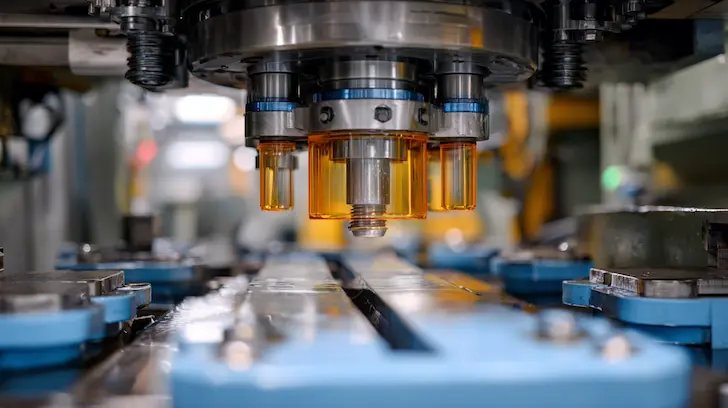
Preventing Phthalate and Heavy Metal Transfer
If an injection molding machine was previously used with low-grade plastics containing restricted phthalates or lead-based colorants, microscopic residues can migrate into your high-end licensed toy. This leads to licensed merchandise production failures during third-party toy lab testing. We mitigate this risk by partnering with specialized toy factories that maintain dedicated machinery for compliant materials. Our toy quality and safety compliance protocols include "Purging Audits," ensuring that machines are chemically cleaned before your production run begins. This level of oversight ensures that your products remain 100% compliant with REACH and CPSIA standards.
Packaging Mismatches:
Meeting 2026 Retail Standards
The "Border Blockade" is often caused by the smallest details on the exterior of a box. Packaging that fails to meet the specific requirements of the destination country or the retailer is a leading cause of inventory delays.
GTIN/EAN Barcode Labeling and Age-Warning Icons
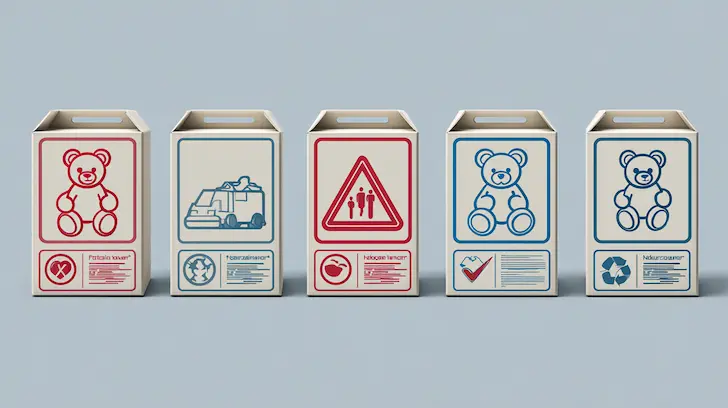
In 2026, retailers have zero tolerance for GTIN/EAN barcode labeling errors. A barcode that is unreadable by automated scanners, or one that points to the wrong SKU, results in immediate retail rejection and expensive relabeling fees. Furthermore, missing age-warning icons or "Choking Hazard" statements can lead to immediate customs seizures. Our customs export for toys team performs a pre-shipment "Packaging Audit," verifying that every label, icon, and legal line is present and positioned according to the regional law of the destination market. We ensure your packaging is as compliant as the toy inside.
Secure Your Supply Chain Against Common Failures
A single compliance error can stop your business in its tracks. Partner with Unstoyppable to treat safety and documentation as a competitive advantage in the global market.
The AQL Blindspot:
Why Independent Inspection is Non-Negotiable
Relying solely on "Factory-Self Inspection" is one of the most frequent licensed merchandise production failures. Factories naturally prioritize production speed, which can lead to a "Blindspot" regarding the accumulation of minor defects.
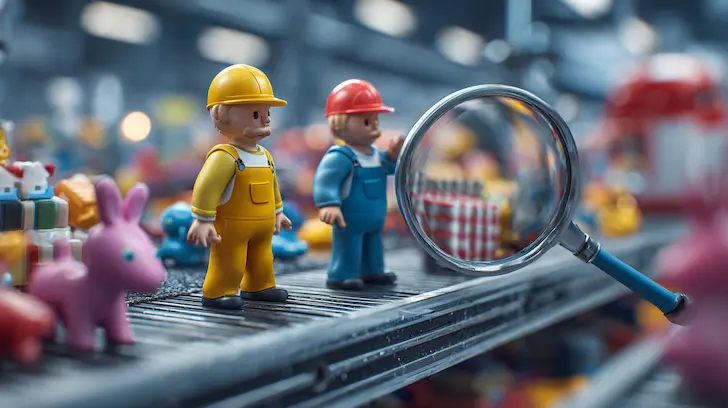
Implementing Independent AQL Inspection in Toy Manufacturing
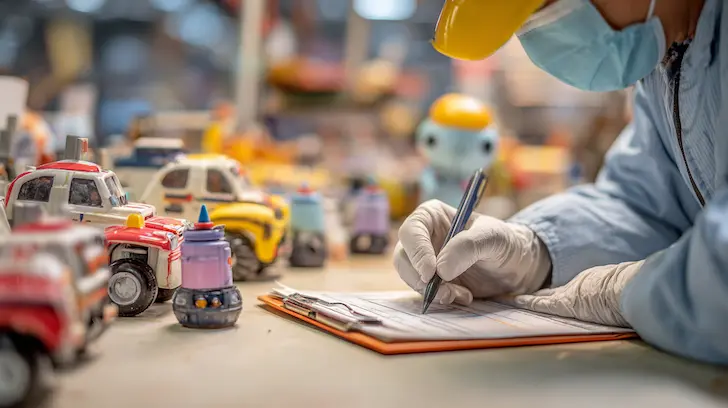
The Acceptance Quality Limit (AQL) is the statistical threshold for defects. When an AQL inspection in toy manufacturing is performed by an independent third party, it provides an objective view of the shipment's quality. We utilize "Final Random Inspections" to check for everything from paint scuffs to mechanical functionality. By catching a 3% defect rate at the factory, we prevent a 100% rejection rate at the retail warehouse. This independent validation is the "Shield" that protects your brand’s reputation and your bottom line.
Transparency Through ERP Production Tracking
To further eliminate the AQL blindspot, our ERP production tracking system provides real-time data on scrap rates and inspection results. This transparency ensures that any spike in defects is addressed mid-production, rather than being discovered after the goods have already been loaded into a shipping container. We replace guesswork with data, ensuring your global distribution for licensed products is based on verified quality.
Compliance and Logistical FAQ
What is the most common reason for a toy to be seized at customs?
The most common reason is a documentation mismatch, specifically the lack of a valid Children's Product Certificate (CPC) or an expired Disney FAMA. Customs authorities require proof that the goods were manufactured in an authorized facility and passed all toy safety compliance tests.
How can I tell if a factory is using "regrind" plastic without my permission?
Excessive regrind often results in a loss of impact strength and color consistency. We detect this through third-party toy lab testing (tensile strength tests) and random material audits during the AQL inspection in toy manufacturing phase.
What happens if my production run fails an AQL inspection?
If a run fails AQL inspection in toy manufacturing, the factory is required to perform a "100% Sort" to remove all defective units and rework them if possible. A second inspection is then conducted to ensure the shipment now meets the required quality thresholds before customs export for toys can proceed.
How does Unstoyppable prevent "Ghost Factory" subcontracting?
We maintain a physical presence in our partner factories. Our inspectors verify the location of the molds and the automated toy manufacturing China equipment being used for your specific project. This ensures your FAMA compliance manufacturing remains strictly within the authorized facility.
Final Logistical Insight: Compliance is the ultimate insurance policy for your brand. By eliminating the AQL blindspot and securing your Disney FAMA documentation, Unstoyppable ensures that your products move swiftly across borders and into the hands of your fans. We deliver security, not just shipments.